
Depth
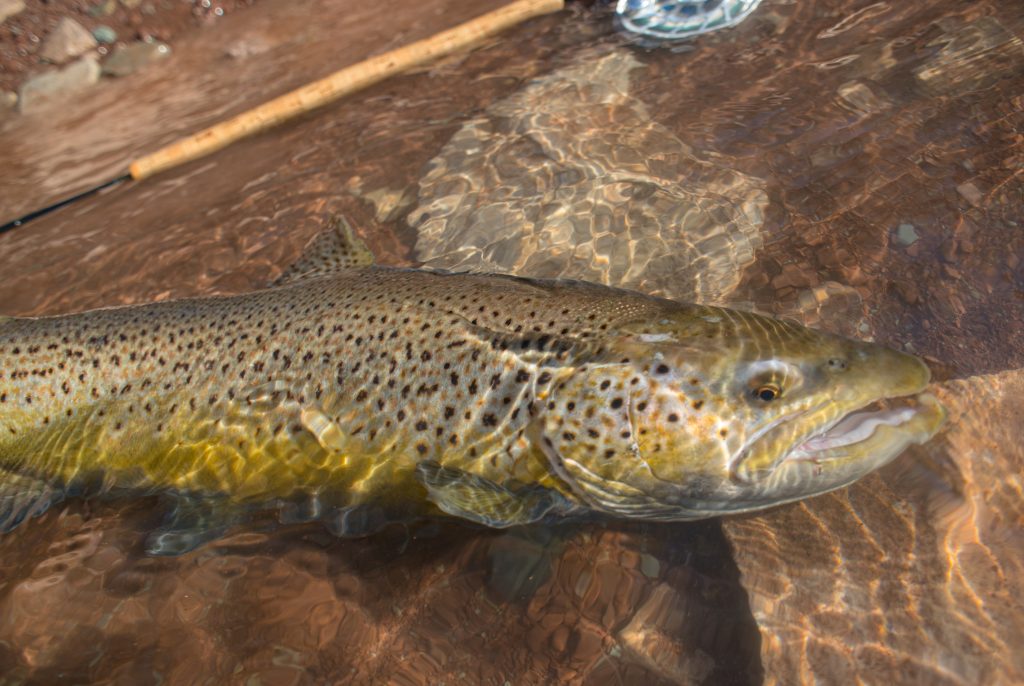
When it comes to presentation depth control is a good place to start. When Spey fishing, the fly can be fished at any level in the water column from riding on the surface to scraping the bottom and everywhere in between. Where to fish the fly is typically a combination of personal preference and tactical effectiveness being controlled by various rigging and line management strategies.
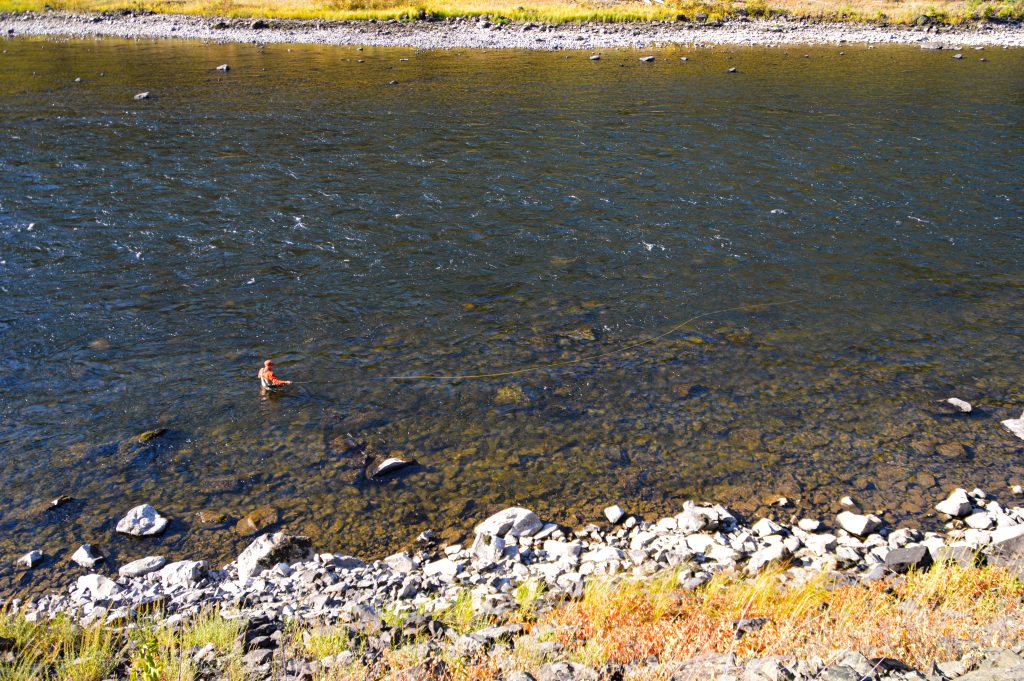
Fishing on the surface provides the extra excitement of witnessing the take of the fish. A floating line and monofilament or fluorocarbon leader the approximate length of the rod provides the basic rigging. The leader can be tapered or just a level length of material provided it has enough backbone to turn over the fly and straighten out upon completion of the cast.
When fishing on the surface some flies are buoyant enough that maintaining a surface presentation can be simply accomplished with an improved clinch or loop knot. However, other patterns that are lightly dressed may not stay on the surface without assistance. Enter the riffle hitch. The riffle hitch is an additional knot added after the fly is secured with a standard non-loop knot such as the improved clinch. It is essentially two half hitches tied in onto the front shank of the hook.
The tippet running from the second half hitch should be positioned so that it comes off the side of the fly. When the head or eye of the fly is pointing upstream, the tippet should run from the fly at the side angle toward the near or casting bank. With this positioning the tippet, leader, and line act to pull and maintain the fly at the surface. This rigging even keeps a wet fly running in the surface film. The hitch works best with up eye hooks and the further the riffle hitch is positioned back, the more effective it is in keeping the fly up. This may require placing the hitch over the front materials of the fly. I leave extra room at the front of the fly for patterns to be used with a riffle hitch.
An alternative to the riffle hitch can be found by using a plastic tube fly for surface fishing. But instead of simply inserting the tippet straight into the tube, a hole is created on the side or underneath the tube toward the head. The tippet is then inserted into the tube using this hole on the side. With the pressure being applied from the side the fly is maintained on the surface when under tension in the same way as a riffle hitch on the hook. The specifics of resenting a dry fly while Spey fishing will be discussed in more detail later in the chapter.
A high percentage of Spey fishing techniques are performed below the water’s surface. Placing the fly down in the water column is typically performed by using a sinking leader / sink-tip or weighted fly or some combination of the two. Finding the proper combination to reach the desired depth relies on science, experience, trial and error, and line management. When using sinking leaders and sink-tips both sink rate and length of the tip will determine how deep the fly is fished in the water column. Sink rate of a leader or tip is measured when it is not under tension providing a simple guide to how fast it sinks in a fishing situation.
Both current speed and surface tension have a direct impact on negating the ability of a leader or tip to reach the desired depth. Faster currents carry the leader or tip in a way that reduces the time it has to sink to a desired depth effectively impacting the actual sink rate . Also, the hydraulics of some runs and pools create a heavy tension that work against the surface area of the leader or tip. Upswells caused by swirling currents can even push the tip toward the surface. Speed and surface tension also varies as when fishing down through a run requiring adjustments.
When fishing below the surface, I begin with a plan for a desired depth to fish. Water temperature may dictate how far a fish will move for a fly and water clarity may dictate the distance a fish will be able to see the fly. Both are key considerations when developing a strategy. Given that the current in a river or stream is less near or on the bottom, fishing the fly in the bottom third of the water column is typically a good starting point for many species that use the lower current to conserve energy. There is a certain degree of feel that goes into finding the right tip for a given situation. I carry a set of sinking leaders and tips to cover almost any situation that may be encountered adjusting as necessary.
Becoming familiar with certain runs or pools on local waters will help dial in the proper tip to use. However, the proper tip may change with water level variations impacting depth and current speed. I maintain notes on what tips work best on certain pools or sections of a river under certain water conditions. Most major waters have USGS gauges that provide a point of reference for water flow to be used when determining tip selection.
Attaining and maintain the proper depth goes beyond leader or tip selection. While a weighted fly can add some complexity to casting, it is also a useful tool in depth control. A weighted fly has its greatest benefit when fishing fast flowing water to assist in cutting through the surface tension. And a weighted fly can be essential for covering specific structure, particularly trout and bass Spey situations that require the fly to sink and fish almost immediately.
I often use a weighted fly to fine tune depth. While I prefer casting an unweighted fly, many modern Spey lines carry a weighted fly without any issues. Adding or subtracting a weighted fly or changing the weight of the fly directly impacts the potential fishing depth. Changing the weight of the fly is a tool for acute control. For example, as the depth and speed of a pool changes from top to bottom, a fly change represents a simple adjustment as compared to making a tip change. I often find myself using a weighted fly in the faster riffles at the head of a pool and moving to a less weighted pattern toward the tail out.
Another tool for maintaining depth is to utilize a head that partially or entirely sinks. This style of head allows the fly to reach a greater depth, but its greatest advantage is depth maintenance. A sinking head keeps the fly down better through the entire presentation reducing the impact of the current raising the head and fly toward the end of the swing. This approach can provide a tactical advantage when pursuing fish that are less likely to rise to the fly as it swings out.
A more important control over depth can be attained through casting angle and mending. Casting slightly on an upstream angle allows the fly to sink faster and deeper than when casting on a downstream angle. But there are some other considerations with respect to casting angle. The use of the upstream angle can’t be too abrupt or there won’t be enough line extended across stream to setup an effective swing. And the downstream angle can have a direct impact on speed. So simply casting on a downstream angle to reduce fly depth may speed the swing up to a point where it is less effective in certain situations.
A slight downstream angle approach works best when covering structure where it is desirable to have the fly begin swimming as soon as it touches the water. When casting along log jams and boulders it is best to rig so that the fly reaches the proper using this angle.
Mending after the cast is completed can have a similar impact as casting angle. A large upstream mend takes the tension off the fly and tip allowing it to free fall until coming under tension. Mending is another tool for making depth adjustments while working a pool without the need to change tips or flies. Aggressive mending that results in multiple mends in succession is effective for allowing the fly to sink when covering pockets, slots and other small areas where it is critical to sink the fly quickly.
Speed
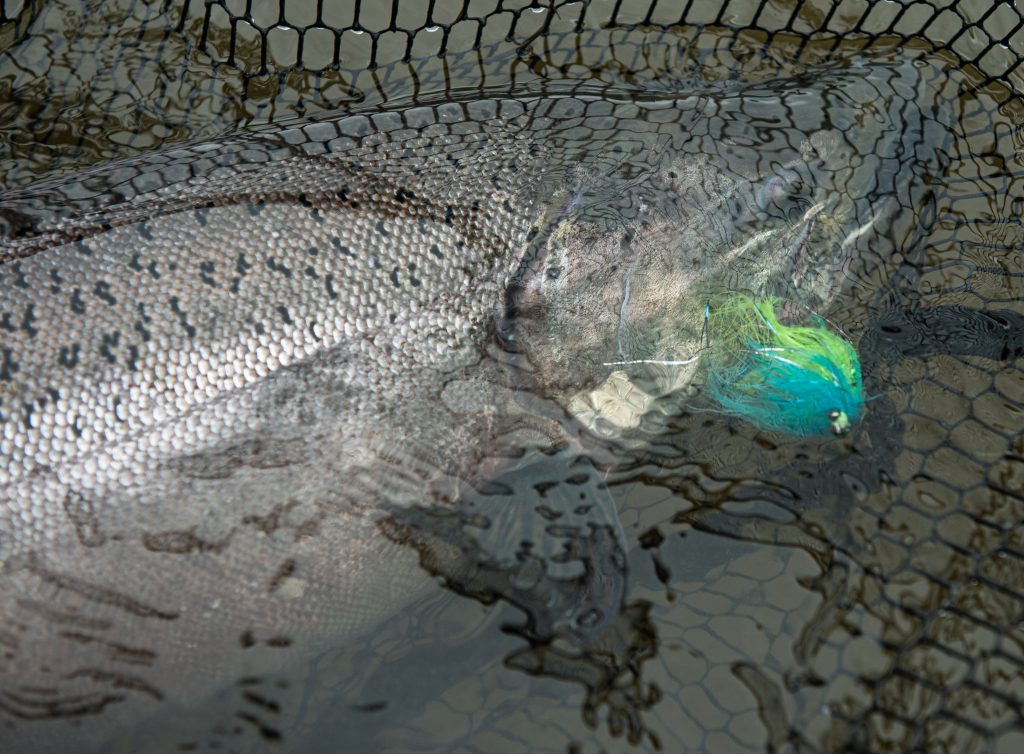
Finding the proper speed of the swing often seems to be the trigger point for a fish to chase and grab or attack a fly. The path of the fly is created by the current pushing on the surface area of the fly line. Speed is controlled be simply manipulating the manner in which the current impacts the line.
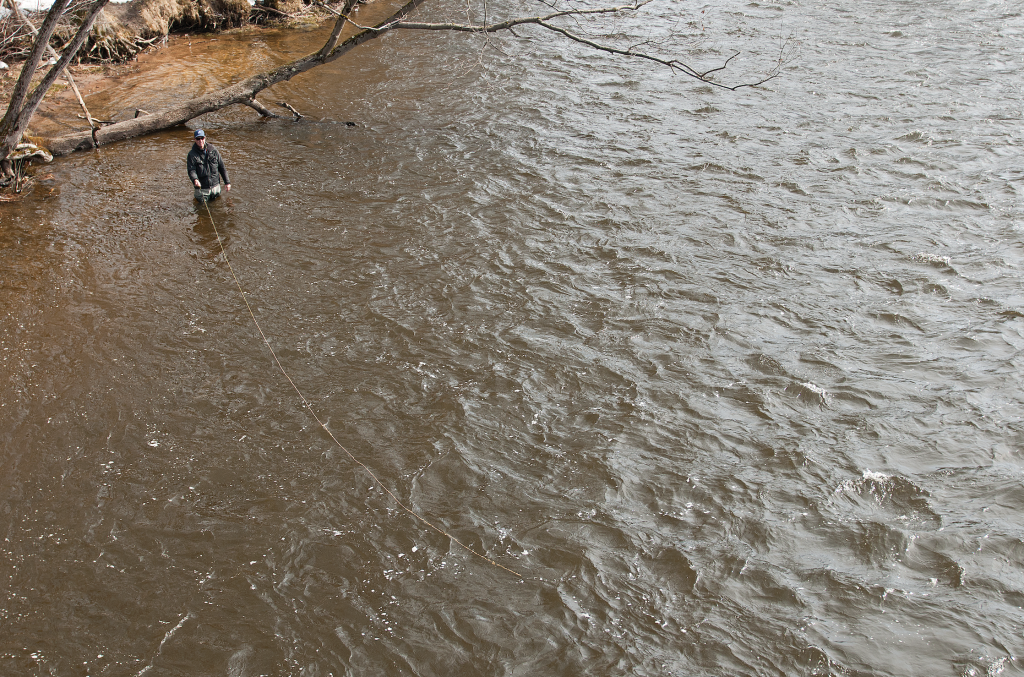
Currents that slowly and uniformly taper to the side of the river being fished create an even and consistent swing path. In this situation very little active line management is required to maintain a consistent swing speed. All that is needed is to cast, mend if required to gain depth, and simply hold on in anticipation of a grab. While it is relaxing to fish such ideal swing pools, the reality is most water requires more active participation.
When the current pushes on the line creating a downstream belly, the speed of the swing and the fly’s movement increases. This can be exaggerated in water where the current flow remains strong or is at its strongest on the side of the river that is being fished. When swinging the fly, a low rod tip close to the water while pointing in the direction of the fly maintains sensitivity. Mending line by raising the tip and rolling it up and across stream reduces or eliminates the belly and slows the speed at which the fly is traveling. I attempt to mend the line in a manner that just moves the belly of the line without impacting the traveling path of the fly. This means mending the head of the line without impacting the leader or tip. Modern short head lines create some challenges in mending due to longer sections of lower diameter running line in play with longer casts. But mending can still be performed effectively. And while sinking or intermediate heads can excel at maintaining depth control, effective mending of a head that is below the water’s surface becomes problematic.
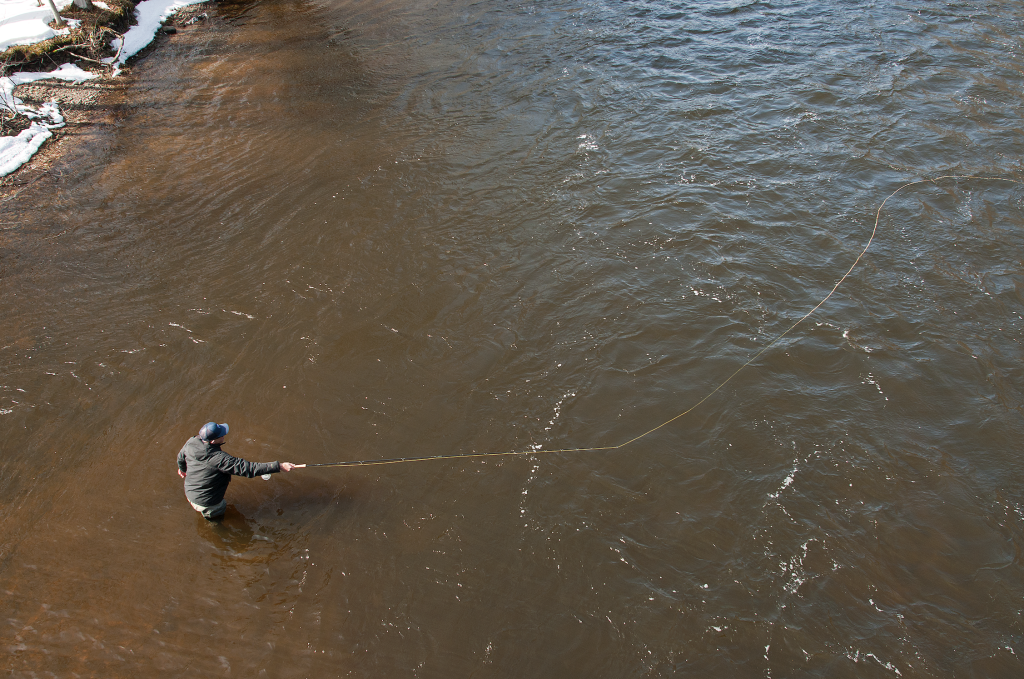
An opposite mending requirement develops where a stronger current exists at the point where the fly lands abut there is a distinct change to a very slow or almost non-existent current on the fishing position side of the water. This scenario provides speed and presentation challenges as the fly and head travels faster than the running line or rear portion of the head. In extreme cases it can be difficult to establish a proper swing. Performing a downstream mend places a belly in the line that effectively allows the running line to catch up and the fly to swing evenly in the current. The downstream mend should be sufficient to maintain the desired swing speed adding additional mends as necessary. Also, simply leading the fly and head by pointing the rod down river and moving it slowly toward the bank may also keep the fly swimming in the slower water.
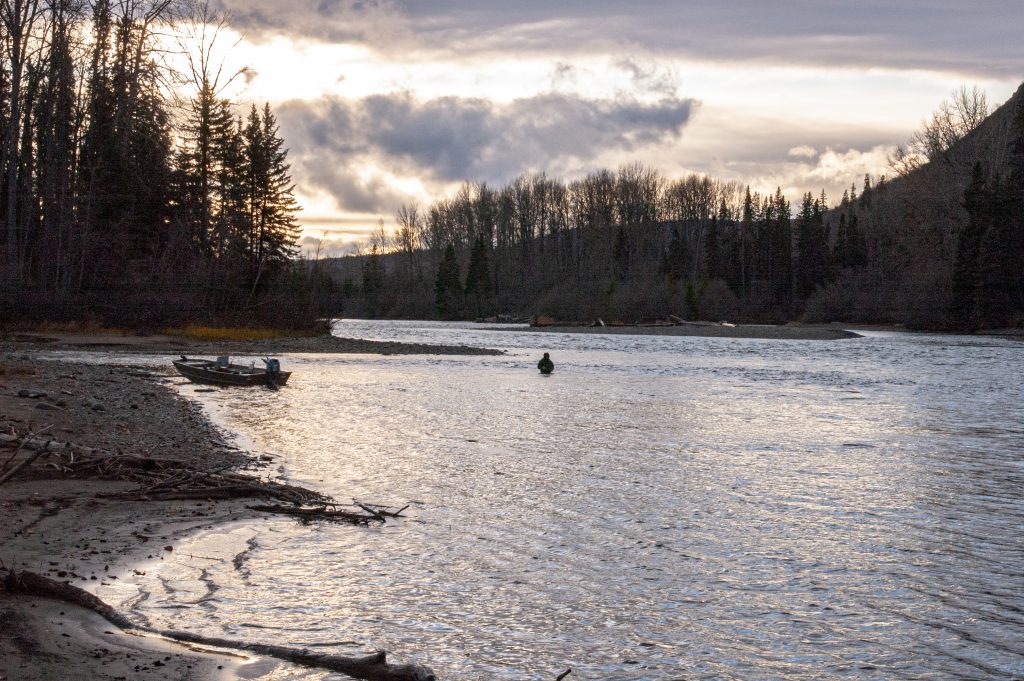
There are times when the challenge of a dramatic change in current speeds can simply be mitigated or eliminated by the wading position. Where possible wading further into the water can place the fishing position closer to the main or faster current. This acts to reduce the soft or slow current in between allowing for more effective water coverage. However, this often comes with a tradeoff. Wading further out usually results in wading deeper. The depth creates casting challenges particularly when shorter rods are involved.
Fishing this type of water requires finding the proper combination of wading distance and depth. Sometimes the inside water can be a deep eddy making it difficult or almost impossible to swing the fly properly.
Most of my mending is rather subtle by using a series of small, short mends. This enhances the ability of the fly to maintain a steady, seductive swing path while providing acute adjustments to the speed. When fishing currents that taper to a soft inside seam on the side of the river that is being fished, a downstream belly generally won’t develop, but up and across mending can still be utilized to further slow the swing. Mending should be made with purpose. As a full-time fly tyer and guide, Nick Pionessa explains, “mending is a literal term. As it applies to fly fishing, it means to repair and should be used only to improve the presentation of the fly by reading the direction and force of the mend required.”
Maintaining a slow or consistent speed is normally the objective. In fact, as the fly naturally speeds up when reaching an approximate 45-degree angle below the casting position, it seems to act as a trigger point for a fish to grab the fly. But there are also situations where a fast swing is desired as the best approach for a certain species or conditions. To increase the speed of the swing, a downstream mend places additional belly in the line pulling it through the current at an increased velocity.
Speed can also be controlled through rod position. Pointing the rod across river instead of at the fly changes the swing path and presentation. This position places the line at a more parallel angle to the current reducing the impact of the push of the current on the line. With this rod angle the fly isn’t pulled across as quickly by the line but is held up as it works slowly through the varying currents of the river. This approach has proven extremely effective for less aggressive fish, particularly under cold water conditions.
Another approach to slowing down the fly can be found through acute line control at the beginning of the presentation. The cast is made across or even angling slightly upstream. As the fly begins to reach its desired depth, a gentle mend is made to place a portion of the line parallel to the current but not impacting the end of the fly line, leader, or fly. This subtle mend creates a slight “L” shape in the line greatly reducing the push of the current on the line. This angle allows the fly to drift in a mostly broadside fashion and undulate in the current on a tight line in nearly a dead drift manner. Additional subtle mends can be added to maintain the “L” shape while the rod is pointed in the direction of the fly. Flies that look life-like under slight tension work best with this approach as well as patterns that represent injured or damaged prey.
As the fly reaches an approximate 45-degree angle, the current will catch up and begin to push the line while swinging the fly. Pointing the rod directly downstream maintains the broadside angle while reducing the tension and push of the fly line maintaining a slower presentation until the very end of the swing. The broadside presentation can be effective at all levels of the water column depending on factors such as species and water temperature.
The concept of the slow broadside approach has evolved from a salmon fishing technique referred to as the greased line presentation developed and made popular by Arthur Wood in the early 1900s. In this approach Wood sought to present the fly in a slow broadside manor near the surface under the premise that salmon on his home waters preferred to rise from their resting lie to take close to the surface during periods of warmer water temperatures. The name of the technique refers to the effort involved in maintaining a fly lines from this era made of hair or silk to float on the surface. Drying and greasing the lines with mucilin, lanolin, or even animal fat was required to keep the line from sinking.
There has been much discussion as to the intricacies of Wood’s method of fishing the fly in a near dead drift fashion while maintaining a proper amount of tension to hook a fish on the take in a manner that allows the fish to mostly hook itself. This technique was the topic of a 1933 book by Jock Scott titled Greased Line Fishing for Salmon. The book was later reprinted in the 1980s with an introduction by Bill McMillan.
Angling the cast at a more upstream direction can further encourage a very slow dead drift presentation. After the cast a slight upstream mend can be added to assist in sinking the fly and the rod tip is held high similar to a high stick nymphing approach. As the fly reaches a 45 degree angle the rod can be pointed at the fly to complete the presentation with a faster swing or point downstream to maintain a slower swimming motion. Utilizing this approach with a weighted fly can be very productive in colder water or for fish that are less likely to chase.
Another approach for slowing the speed of the fly can be found by purposeful rigging. A weighted fly combined with a monofilament or fluorocarbon leader of the approximate length of the rod allows for a slower swing than when a sink tip or sinking leader is utilized. The smaller surface area of the mono or fluorocarbon reacts less to the current allowing it to cut through more efficiently resulting in a slower presentation particularly on the inside of the swing path. This rig can also be used to more effectively dead drift a fly near and around specific structure. Rigging with a weighted fly and long leader has its greatest benefit in low, clear water and/or cold-water conditions.