
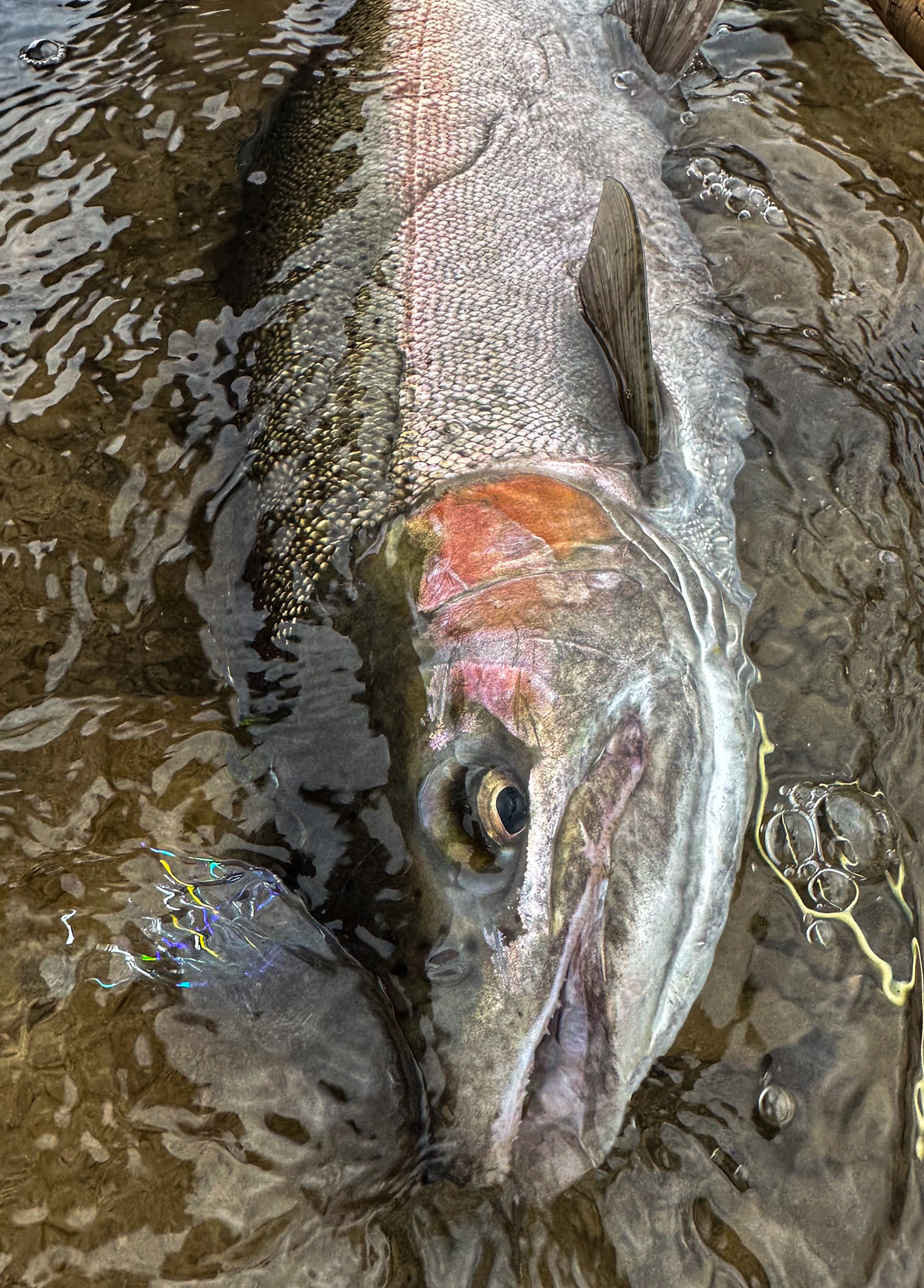
Possibly the most valuable lesson I’ve learned from years of fly fishing is not allowing oneself to get locked into a single way of thinking. Don’t be trapped in a box. Both personal expression and strategic efficiency drive most of our choices of equipment, rigging and overall approach. While always striving to enjoy the process of spey casting and fishing, I recognized a long time ago that this style of fishing offers many tactical advantages as well. Continually adapting and adding new tricks keeps the pursuit new and fresh.

Stealth seems to be a factor integral to fly fishing. It’s a lesson gained early in my education of the sport. Stealth is something carried along with me every time on the water and equally important as the rod, reel, and fly. In situations where sharing the water with gear anglers, I always feel that stealth provides an equalizing advantage to the efficiency often gained through the use of non-fly fishing equipment. I consistently think of the steps that can be taken to not alert the quarry of my presence.
We may not always think about stealth and spey casting at the same time. The spey cast is typically about efficiency and avoiding casting obstructions. But it can also be part of an effectively stealthy process that blends the cast with an enticing presentation of the fly to be utilized in certain situations.
Stealth counts most when flows are low, rivers run clear, and fish become more wary. I think in terms of gaining a stealthy advantage through rigging, casting, and general presentation.

When it comes to rigging, I usually ditch the sink tip when water is low and clear opting for a long leader the approximate length of the rod. I’ll even use this length leader when fishing a clear intermediate tip. Low, clear water represents the conditions when I prefer fluorocarbon – either for the entire leader or at a minimum the length of the tippet section. Fly depth is then controlled by the weight of the fly either through the gauge of the hook shank or the added weight of a bead, cone or eyes. One advantage of clear water is the fish’s ability to see the fly from a distance resulting in prime opportunity to fish the fly up in the water column often requiring no or minimal weight for an effective presentation.
Small, understated flies tend to match well when swinging in low clear conditions. Traditional wet flies and subtlety tied baitfish patterns are my choice in the Great Lakes region when faced with the challenge of low flows. And I have added some patterns to my repertoire after a couple trips to Argentina in pursuit of sea trout. A very effective approach for low water on the migratory trout rivers of the Patagonia region is to swing nymph patterns. The idea of fishing a nymph may seem to fly in the face of the essence of swinging a fly. But hear me out. These patterns are designed to look alive. Most incorporate a bead for weight and contrasting color along with rubber legs to provide life-like movement in the water with a slight strip or retrieve action. And it makes perfect sense, before going to open water, migratory fish typically spend time in their natal waters feeding on natural food sources that can include aquatic insects. Even though nymphs typically float freely in the water when dislodged from rocks, a slow presentation as the fly moves and rises through the swing creates an enticing and at times deadly approach. Not that this is an entirely new concept to me as I remember successfully swinging hexagenia and stonefly patterns in the past on Great Lakes rivers.
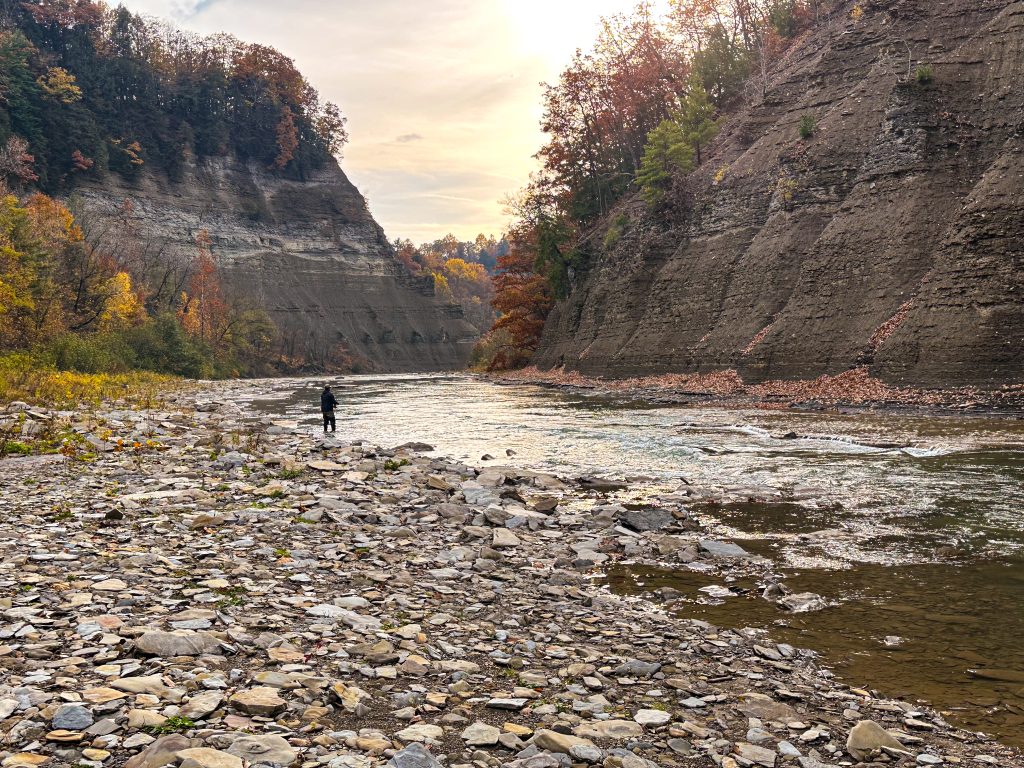
Stealthy habits can be found in the casting and setup as well. Often the efficiency benefits of the spey cast cloud the fact that the setup can be somewhat intrusive on the surface of the water. This is quite evident during the sweep of the waterborne anchor casts. But when faced with low water, focusing on limiting water disturbance through careful setup allows for a better chance of going undetected. Utilizing the single spey or snake roll helps minimize water disruption by simply kissing the water’s surface during the setup just before delivering the cast. I prefer a Scandi head for the stealth approach, but a light Skagit head will also work. To help minimize water disturbance further, I set my anchor further back as opposed to out in front of the casting position.
The final piece of the stealthy swing lies in the fly presentation angle. Fishing the fly so that it shows to the fish ahead of the leader is the key to remaining undetected and, quite literally, catching a fish by surprise. Showing the fly first begins with the casting angle.
The cast is made at a nearly 45-degree downstream angle to begin the swing butt first as opposed to broadside. An important aspect of completing the cast that enhances the presentation angle is to finish with a reach instantly after completing the forward stroke.
The reach or reach cast as it is known when performed with a single hand overhead cast, finishes by pointing the rod upriver and effectively completes an upstream mend while enhancing the angle to the fly.
After the optimal angle has been established, the fly begins a slow swing. The proper angle is maintained through micro mending to head off any downstream belly and by pointing the rod tip out more toward the opposite bank as opposed to pointing at the fly.
Experimenting with a strip or retrieve can entice a fish to grab the fly. Adding a subtle action to the fly has worked in the past in the Great Lakes and is the main approach for sea trout in Argentina.
Presenting the fly to the fish before it sees the leader starts with an accurate and effective cast. There must be a complete turnover of the leader for the fly to begin fishing immediately. And the cast must be placed at the proper angle. With an angle too high the fly begins to swing broadside, and the leader shows to the fish before the fly. Too low and the fly may miss holding water across the river and isn’t given sufficient time to sink in the water column when depth is desired.
Various factors can create a challenge for making effective casts. Wind is the most common disruptor. In windy conditions I use a heavy bottom hand on the forward stroke to create a tight, efficient casting loop. I also aim the cast by driving it more toward the water’s surface as opposed to the horizon. One important step learned while casting in the intense winds of Patagonia is getting the line down quickly after completing the forward stroke. Lawson, the head guide at Las Buitreras Lodge demonstrated a little trick on a particularly blustery day. While completing the forward stroke and subsequent reach upriver, dropping the rod low and even sticking the rod tip into the water positions the line just above the water’s surface where the wind tends to have less impact. This step also places the line on the water quickly minimizing the opportunity for the wind to push it off course. When performed properly this an extremely effective approach to remaining precise with the casting angle. This approach seems easier to employ with a down river wind but is still quite effective when the wind direction is angling upriver. The lower diameter and less surface area of a Scandi head tends to catch less wind than a higher profile Skagit head.
When fishing a small wet fly, understated streamer, or nymph, I anticipate the take of the fish to vary from a heavy grab and turn to the most subtle of pulls. Maintaining a tight line and acute sensitivity to the fly assists in identifying the soft takes. When presenting the fly on this slow down river angle, a fish may just grab the fly and not move. I tend to be quite passive with my swing hook sets. But this style of fishing typically requires more active reaction. Be prepared to set with an upward or off to the side movement when you feel a hesitation, or a bump / tick sensation followed by the feeling of weight. And on occasion there will be the feeling of slack when a fish grabs and continues moving upriver.
What I enjoy most about this style of swing fishing is the interactive and tactical nature of the approach. Every movement has purpose aimed at optimizing the presentation and identifying the take of the fish. This approach can be used to entice both migratory and resident fish in a sour mood caused low clear water. Just another tool to have in the spey fishing toolbox.

One experience from Argentina this past spring sticks out in my mind. The water was clear, winds calm, and the mid-day sun was bright. I made a long cast at a 45-degree angle across a placid pool. Almost immediately something didn’t feel right, and my line hesitated slightly when it should have started its slow swing. With a decisive set I was tight to a chrome bright sea trout that rocketed high above the water’s surface.