Do you know what a “waschl“ is?
I’ll guess not, so you get a short crash course in Bavarian dialect.
Actually, there are many variations to explain and translate this word but the main concern for us is that it usually means something big. So if you meet a Bavarian fisherman and he tells you that he caught “an saubanan waschl” he means a big trout, or, in the best case, a big hucho.
The original, more basic version, was introduced by Mr. Sichelschmidt from Berchtesgaden long time ago, and was designed to get down deep and catch big trout – mainly by spin fisherman. There are a lot of nice waters around Berchtesgaden – I think a lot of you know the famous Königssee – and if you visit one day, keep in mind that you can find a good amount of trout in all the rivers around that area.
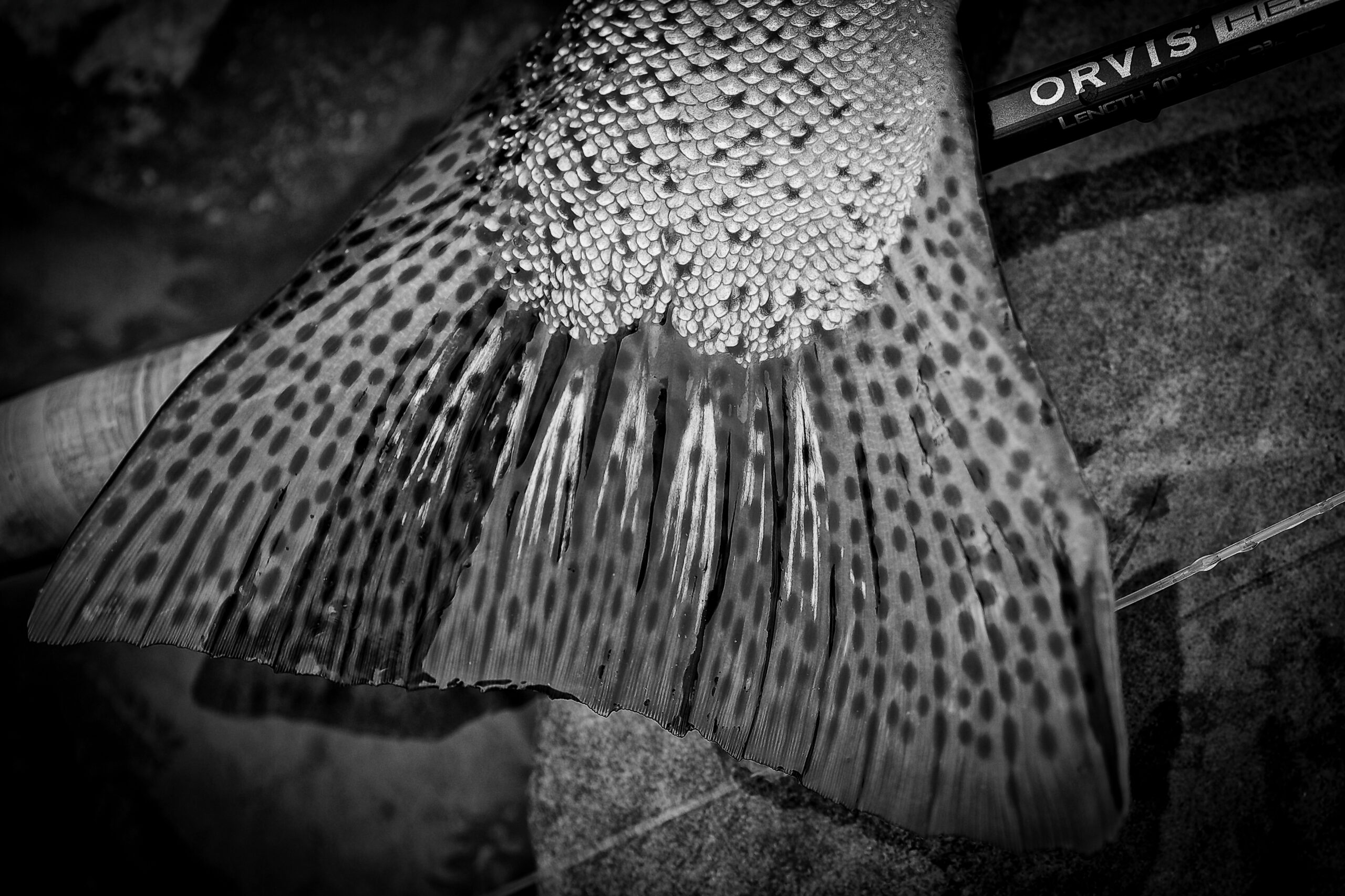
We don’t wanna talk about spin fishing here, but, since the design of Mr. Sichelschmidt was so successful, even if a little bit too heavy for a fly rod though, some of my buddies Franz Xaver Huber and Hans Wurm changed it into a socially acceptable fly, at least from a fly fisher’s point of view and named it the Huchenwaschl. Huchen is the German name for hucho hucho, a fish that became a highly sought after fish among the fly fishing community in Bavaria, Austria and Slovenia. Although I have to say -as much as it is a dream to catch one – so often you go home without one, or should I say most of time. To be straight, if I get one a season, which – on most of our rivers- runs from September 1st until February 14th, over the magical mark of 1 meter, it is a top notch season!

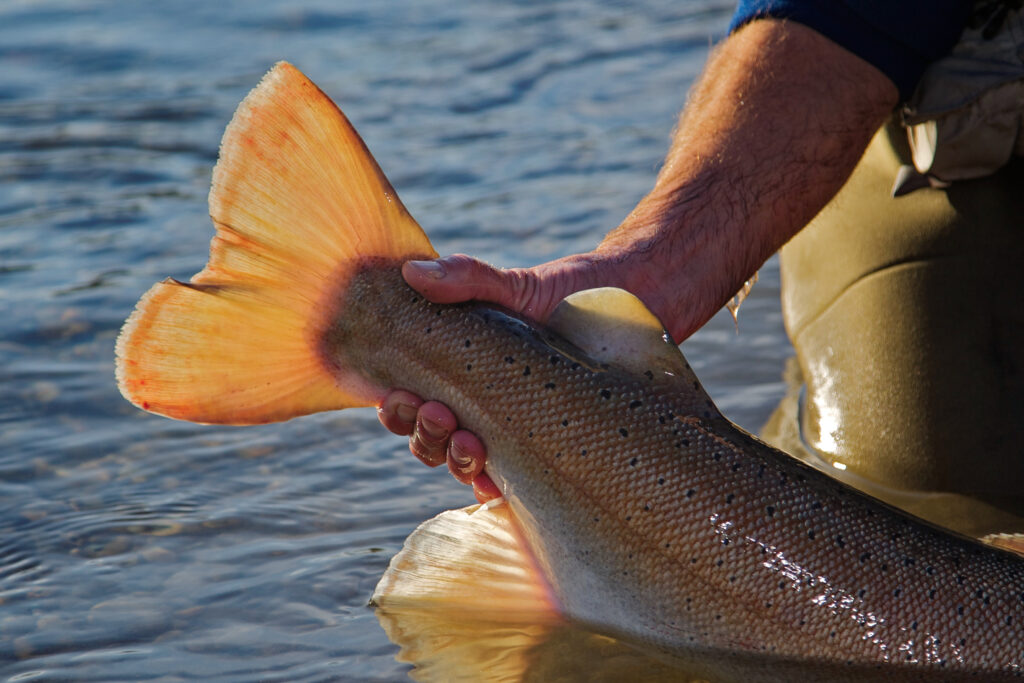
Over the course of the last two seasons, I caught none, just to give you an idea of what to expect. Nevertheless, I like it from the local point of view, especially in late September until early December, and the bycatch, which comes in the form of big brown and rainbow trout, is a good reason to use the Huchenwaschl.
I’ve started skiing again thanks to my new girl friend from the Netherlands. Really weird, that a girl from the flat land brought me back to skiing as a Bavarian that grew up around valleys and mountains. It kept me away from the river a little last season. That’s life, always good for some surprises, like the Huchenwaschl just because when I was fishing a smaller one around 3 inches for trout I caught a big hucho with it. That was two years ago. So every now and then the wrong intention is the right intention garnished with a decent portion of luck on top, especially if it’s a fish over 30 pounds.
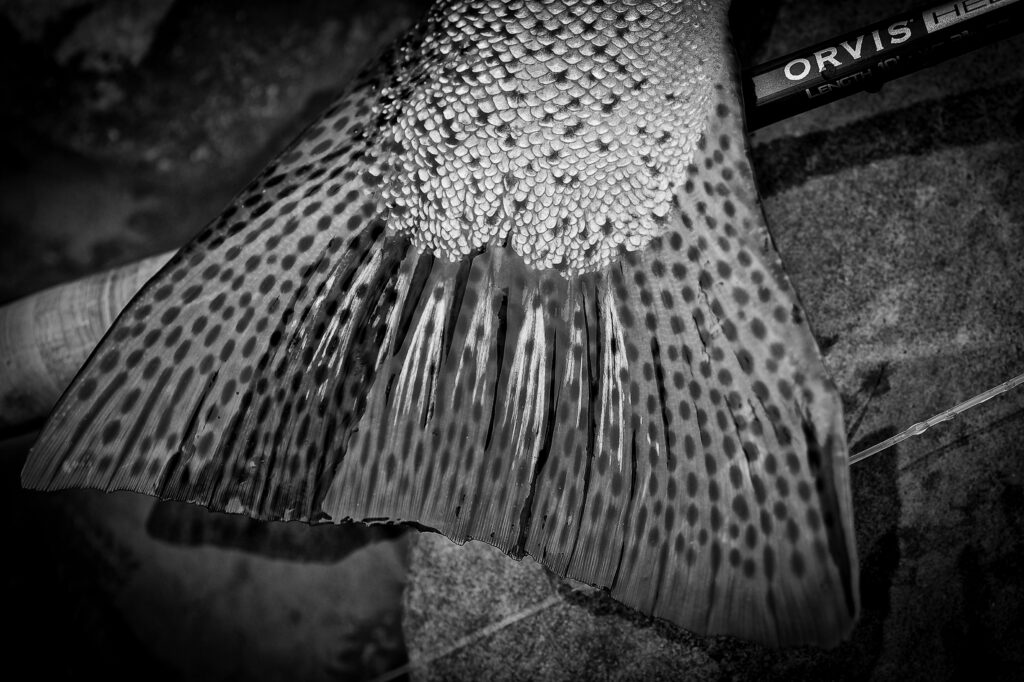
So as you found out…the name might be little bit irritating. Don’t take it too exact but no matter what you call it…it’s a pretty good tube fly to swing and fish for trout, my main target here in Bavaria. Since it is so easy and fast to tie it is perfect for some risky presentations around logs, undercut banks or dead wood structure with undermined edges, all in all places where the big boys (trout) like to sit. Places you fish by far more relaxed when you have a well filled (stocked) fly box with streamers ready in your vest and there is no need to suffer once the fly hooks a tree and you loose it.
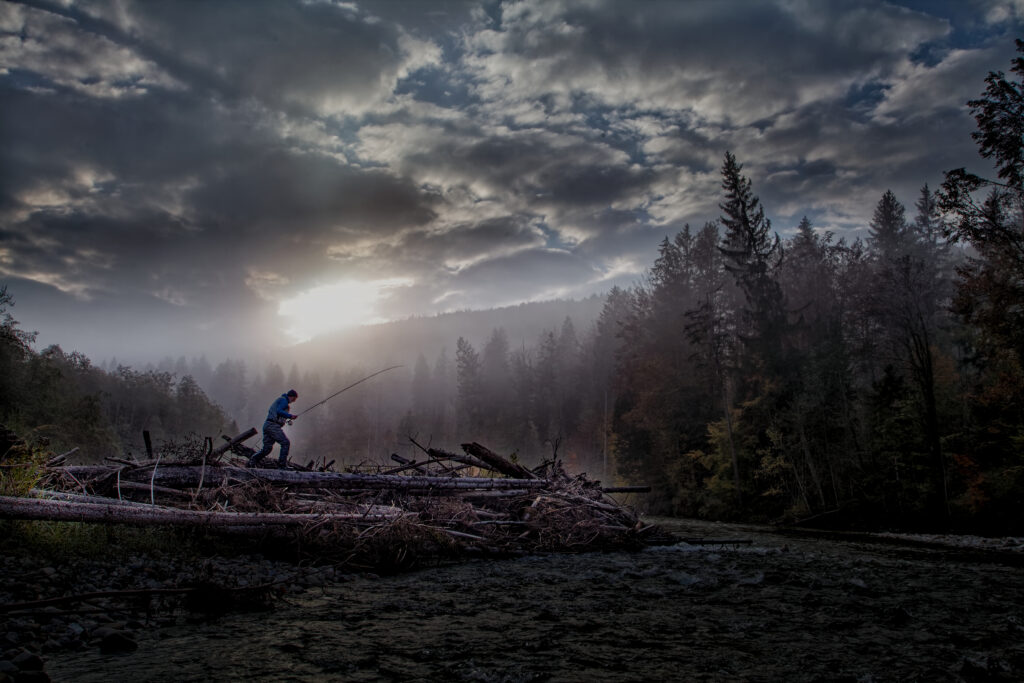
One good tactic which -beside loosing your tube fly- might cause you a solid portion of extra exercises -like climbing over big trees, rocks and other obstacles that are usually standing in the way and path you follow along the river- is to fish from from the ungrateful deep bank while casting the tube into flat middle water and the let the tube swing into the deep shore line along trees or whatever. I got some big browns like that. The method might be not considered as a classic swing but it is a good alternative to present a weighted streamer differently, maybe also in an angle trout are not used too, and to hold it in the hot spot for a longer period. The fighting and landing part can be tricky though. If you hook a decent fish out of a postion like that you have at least a very nice problem. A few years ago I ruined my camera, not my fishing equipment that way. I just stumbled over a root while trying to reach a really good spot. I was up on a small hill, tried to get down stumbled as mentioned, fell and took the unusual and expensive way down to the river. I simply slided down the slope. My camera attached to a tripod arrived first and was totally destroyed. I myself made it down in shape with just a few scratches in my face and ready to fish, although my mind was more like crying. A painful experience and a bigger 20 inch trout I got a few minutes later helped by far not as much as I hoped. A broken rod is easier to take I tell you. At least another story in my portfolio as a fly fisherman.
So the gentle and cozy way might be casting from the flat side to the deep side and swing the tube back to your own side. The motion away from the predator can be very attractive and is a good way to trigger lazy trout. If you fish it along and in between logs, be brave and present your fly close to all the dangerous places trout love, especially browns. Usually a cast in a 45 grade angle will do and now you have two options. Option one is to leave it like it is and let the current form a belly downstream so the the tube gets pushed away from the holding place. That happens faster than I write but it is a great opportunity to surprise a trout, tease it, seduce it and convince it to dart out of it’s hiding place. Nice to watch when a waschl follows the ‘Waschl and finally takes it in flat water. A so called speed swing I’d say with a lot of motion and action involved.
Option two, which is a good alternative for a one handed rod when the casting and presenting distance is not too long, is to mend the line upstream, once the tube touches the water. Therefore you have to have some extra line ready and give it free with your line hand once you do the mend upstream. This way you keep the tube closer to the bank for a longer period. You can repeat the mend during the drift and with every mend the tube dances along a tree or similar obstacle. Mend and swing or swing and mend and with every mend the tube moves up while it falls when you pause. A nice dance trout seem to like. A perfect place for that is the top of a riffle where you can easily wade in, take a good position and start playing the swing and mend method and let the fly drift into deep undercut banks and once you loose patience mend down and let the fly swing away from deep into flat water and start the procedure again. But don’t stay too long at certain spot. If no trout shows up, move on, you need to find one that is hungry. Essentially there are so many ways to fish the ‘Waschl from traditional approaches to a little bit more open minded and sophisticated ways of swinging it.
Consider it also for anadromous fish like steelhead and pacific salmon. You need to change the colors of course but the ‘Waschl is definitely worth a try. To come back to the trout’s world I really like to play with the current, while fishing the fly, interact with it and use it wisely, sometimes the fast and sometimes the slow way, always dependent on the situation and circumstances at the river and last but not least by my personal mood.
Tying Instruction
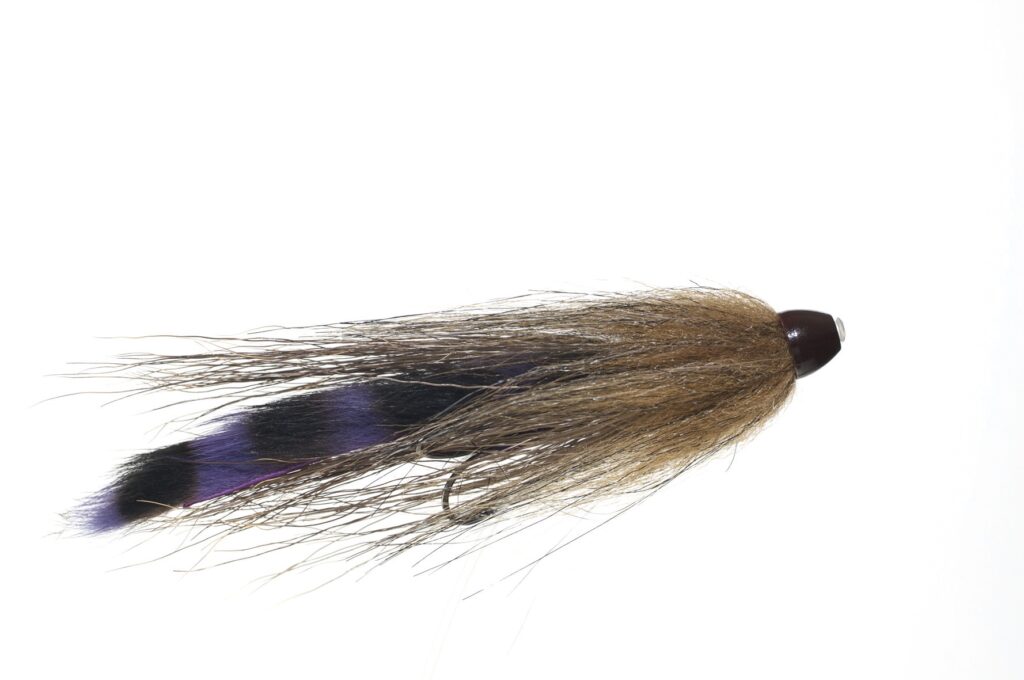
Materials List:
- Hook: Single tube fly hook with a straight eye
- Tube: Plastic tube color as you like
- Wing 1: Solid rabbit stripe about, usually around 4 inches (you wanna’ catch a big trout.)
- Wing 2: Moose Mane Hair long
- Collar: Craft Fur, Puppet Hair or similar alternatives.
- Head: Conehead adjusted to the size of the tube. I like the bulkier brass heads

Choose a slightly thicker and about two inches long plastic tube (there are lots of tubes on the market now so it*s a matter of taste too) and put it on the adapter needle. Start with a ground layer with the tying thread. Stop winding in the middle of the tube.
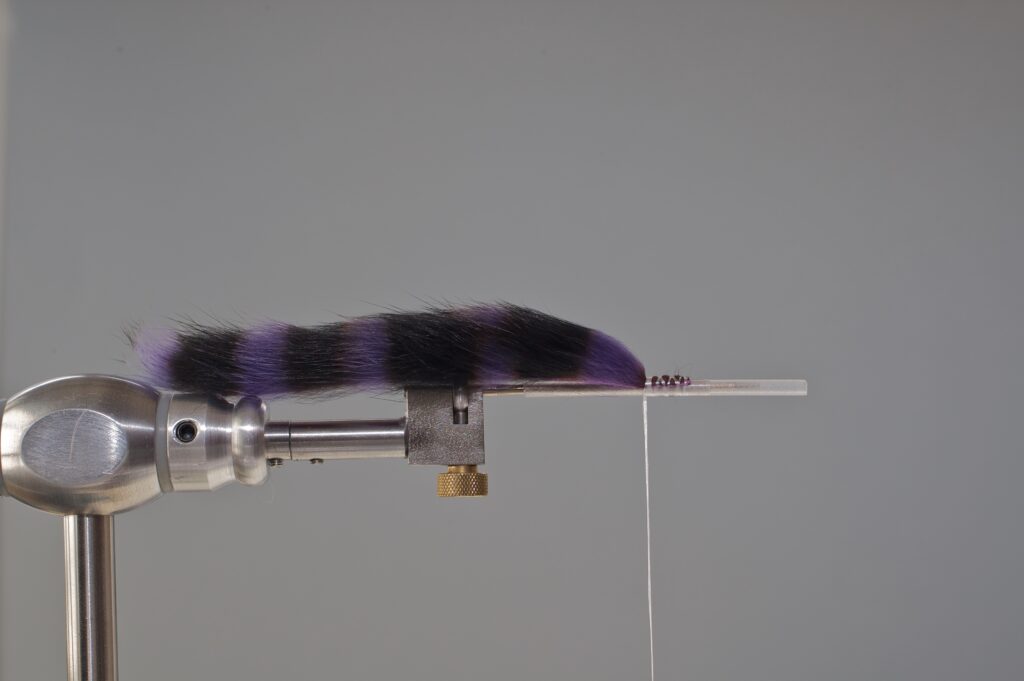
Fix a nice stripe of rabbit strip – color is up to you -on top of the tube and secure with tying lacquer.
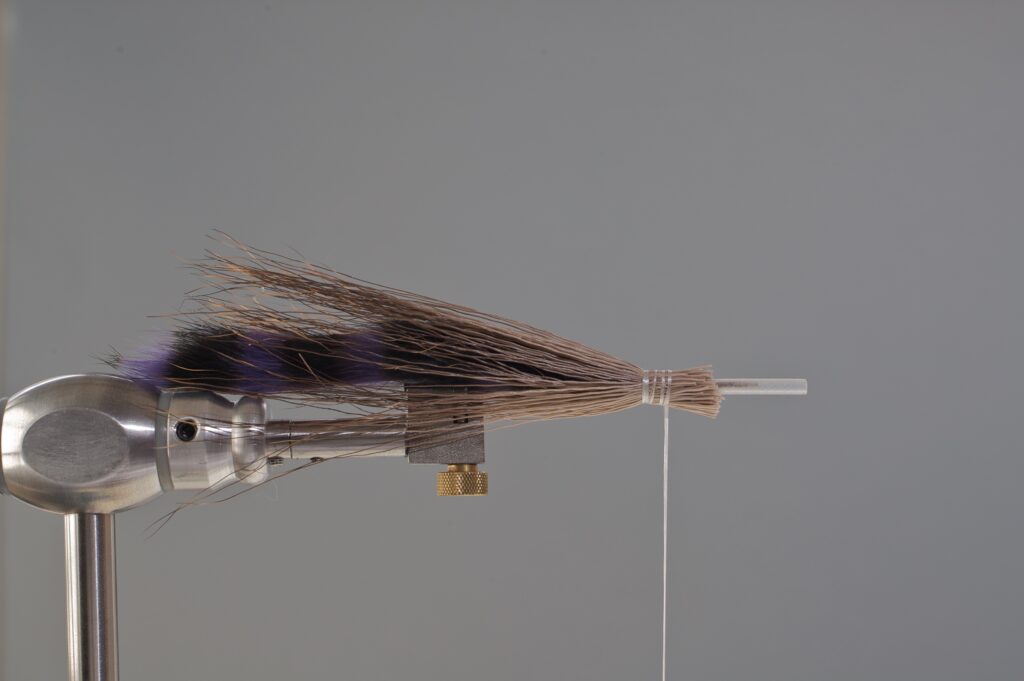
Lay the long moose mane hair around the tube with the tips showing to the back and fix it with a few loose turns of the tying thread. Don’t pull the thread too tight in the first round, otherwise the moose hair spreads out too much and doesn’t lay straight around the tube.

After a few more turns pull the thread tight a little bit away from the actual point where you tied in the moose hair and secure it with lacquer or thin model building clue.
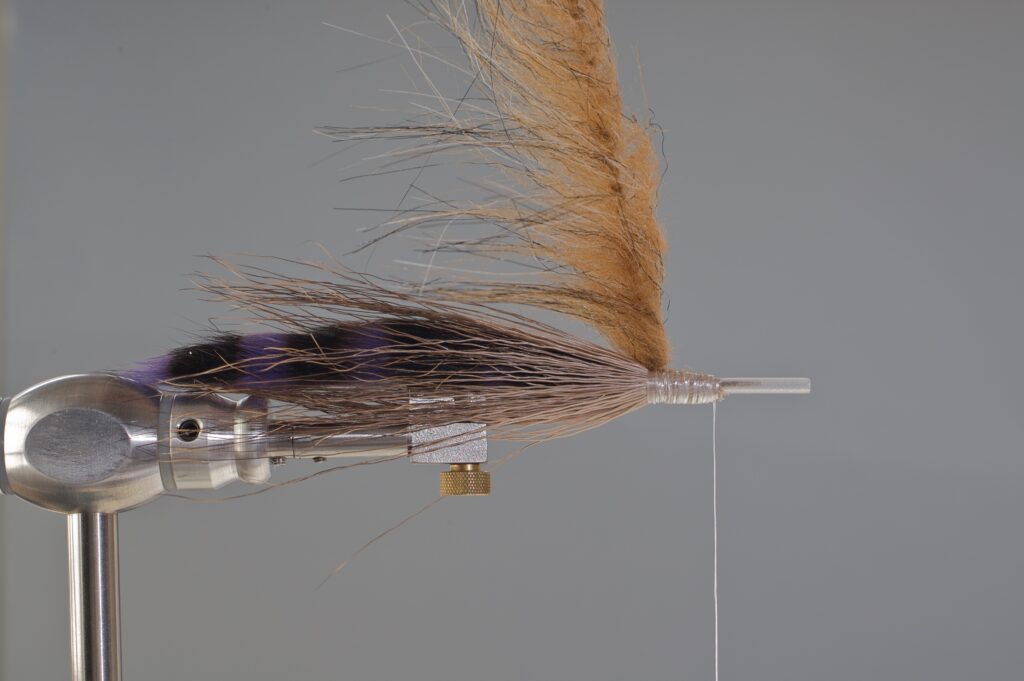
Now cut out a stripe of a puppet hair mattress ( for bigger tubes about 1 cm wide), craft fur, streamer fur or however the industry names it. Stretch it so that you get a thin center and tie it in right where you placed the mouse hair.

Wind the stripe forward and strip back the fibers after every turn like you do with a hackle for a wet fly. About 3-4 turns should do to get a nice collar.
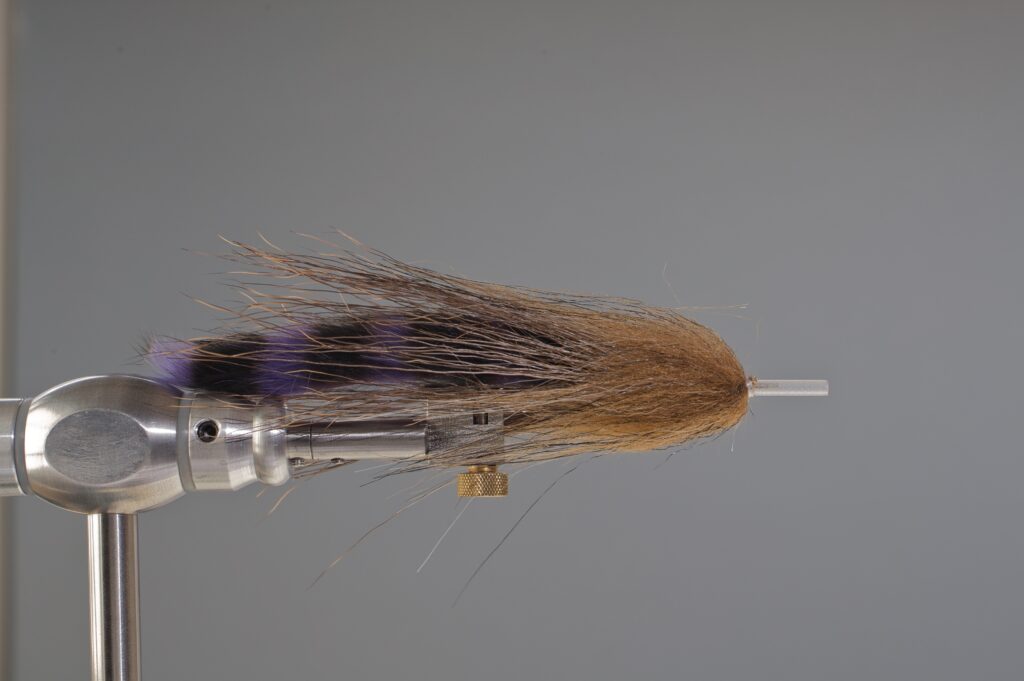
Tie the stripe off, cut it off and give it a nice trendy shape with a comb so that all fibers are free to do their job in the current.
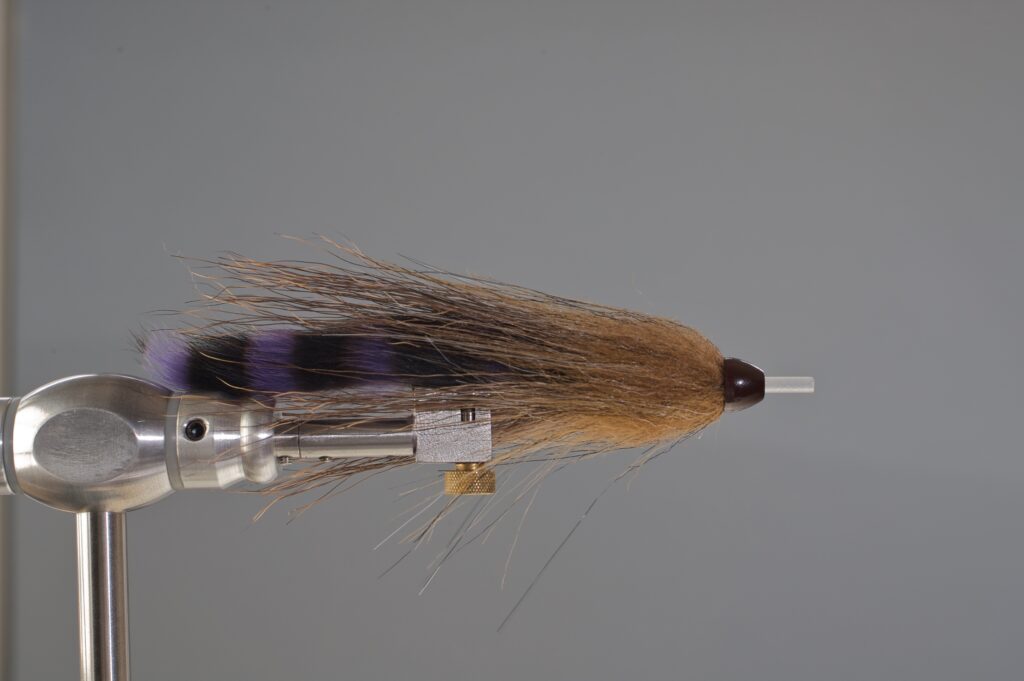
Put some super glue on the tube, push on the conehead and press it into the collar. Cut of the tube -leave little space- and burn the tip of the tube with a lighter.
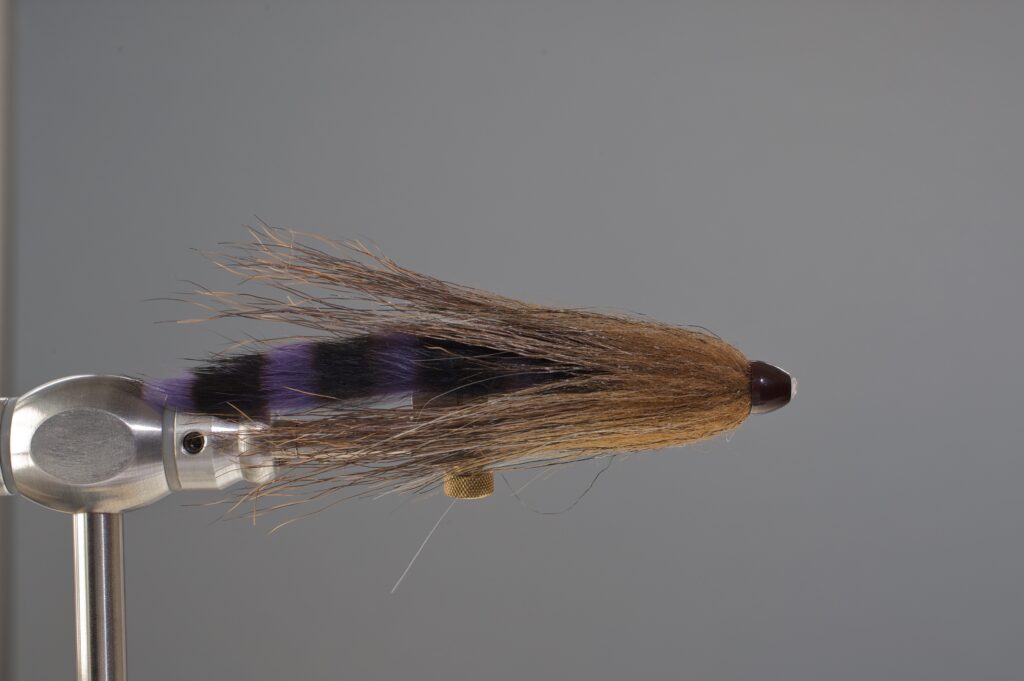
The Huchenwaschl is ready to go. If you look close and detect a treble hook. The fly goes in the water with a single hook, of course, at least when I fish for trout
Some thoughts about alternatives:
- Of course you can change materials as you like. Instead of craft fur for the color you can tie in deer hair and cut it to a more sculpin shaped front or just use pre fabricated brushes which are available in so many variations and colors.
- For all my rivers at home, which sometimes are fished hard I stay with natural colors like dark white, gray or for high and dirty water in dark purple and black variations. It is and still is all a matter of own choice and believing.
- For anadromous fish you can add color…from blue for steelhead to orange and pink for salmon
- There are so many coneheads on the market now so put an eye on those ones you can push into a tube and match the weight to the river you like to fish.