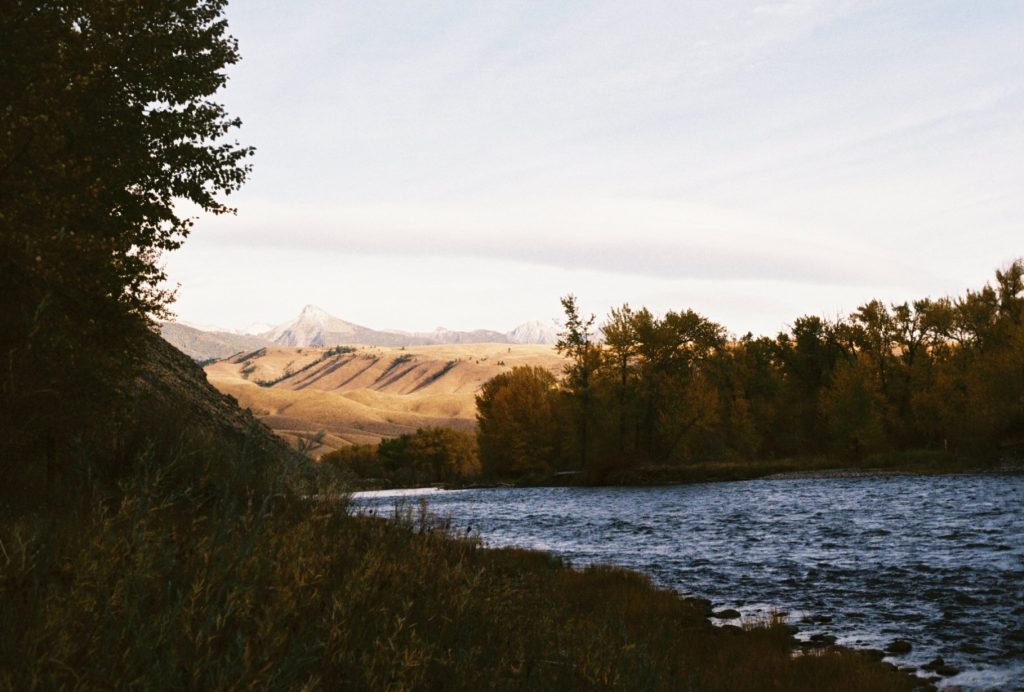

The fall steelhead fishery on the upper Salmon River in Idaho is unique. Nine hundred miles and several thousand vertical feet from the ocean, it’s one of the most incredible animal migrations on the planet. Given the current state of affairs, the journey these fish make to and from the sea is almost incomprehensible.
The Snake River Dams have resulted in extinction-level returns in recent years, and thermal temperature blocks due to the dams can prevent these fish from returning to the upper Salmon until the Spring. One could almost forgive anglers who mistakenly consider this a Winter Run,
especially considering that bulk of the artificial return of hatchery fish to the Sawtooth basin generally doesn’t occur until February or later. While many fish for these Summer Steelhead during Idaho’s misguided and controversial Spring season, the better and more ethical fishery occurs in October and November.
Late Fall in this part of Idaho is special. Animals and people are on the move ahead of a long, cold winter. Things speed up and slow down all at the same time. Those actions cancel each other out at certain moments, and time stands still. In town and on the river, you can feel the tension of folks trying to drink it all in before it’s gone. The weather is unpredictable and plays a significant role this time of year. You can swing a fly in short sleeves one afternoon and wake up to a foot of snow on the ground the next day. But more often than not, cold nights and frost-covered mornings are the norm.

The morning ritual at camp is almost always the same. The hiss of propane and smell of hot coffee, a familiar alarm clock needed in the darkness of the predawn. Feet are forced into frozen waders and boots, the river map unfolded across the icy hood of the car, illuminated by headlamp. With great anticipation, plans are laid out, throats swell with hope. A few hushed laughs before the day begins. I’ve come to love these stolen moments under an awakening sky.
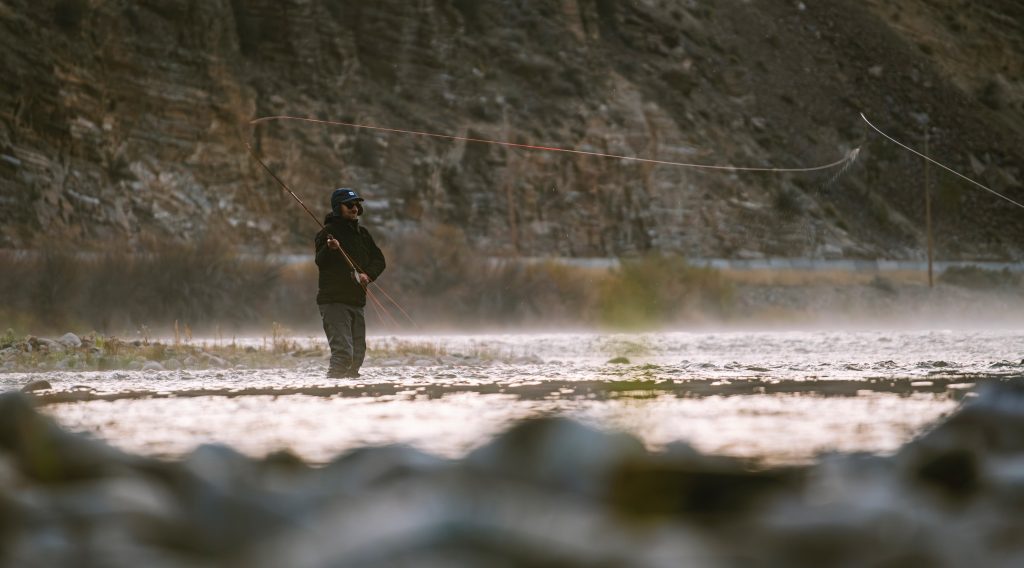
From a fishing standpoint, this is not the Deschutes in August; first light doesn’t offer many advantages, but the days are short and an early departure from the boat ramp is generally needed if you want to fish more than a few runs.
Being so far inland, various angling tactics are deployed on the Salmon. When the fish are around, you’ll hear of anglers catching them on everything from shrimp bait and plugs to intruders and hairwings, even stripped streamers. As far as I can figure out, steelhead will eat anything but not everything. However, the actual catching of steelhead had been a nonexistent part of my experience on this river! Having missed the good years of the early 2000s, I started steelheading here just in time for the worst returns in history.
The Salmon has served as my steelhead training ground. I flubbed 90% of my casts the first few years. I still screw up plenty, but hopefully that percentage has improved over time. It was that progress each season, and the excuse to fish wonderful flies on a beautiful river that kept the excitement up, even as others were hanging up their rods for good due to the pitiful state of Columbia basin steelhead, particularly this far upriver.

The expectation of catching a fish here with so few returning was almost completely gone by the third or fourth year. The trip instead became an excuse for a long, dark drive across the Idaho desert. A reason to stand in the water and scan the cliffs for Bighorns. To wait for friends to arrive at camp in the wee hours of the night, eyes and nerves too shot to sleep after a white-knuckle drive dodging ungulates. The main street of my childhood hometown turns into the state highway that eventually leads to Salmon. I grew up two hours and two right-hand turns away from these fish but didn’t realize it until much later. Both ends of that road call me home.
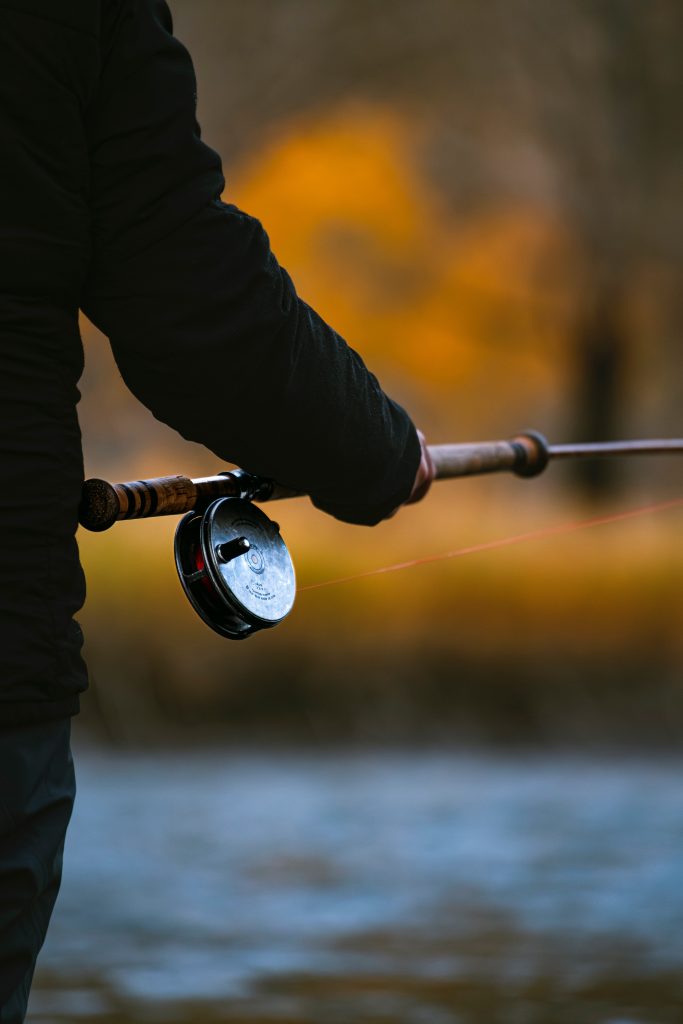
That drive isn’t always pleasant. A few years back, an Antelope committed suicide on that highway by running between my vehicle and camper. I felt a thud, looked in the mirror, and saw an antelope airborne. A passing father and son pulled over to help. If I had to guess, the boy, about eight years old, held a piece of my camper wheel well in his hands. As he handed me the piece of fiberglass, he shouted, “You creamed that bastard!”. The dad nodded in approval. A fishing buddy’s drift boat and trailer suffered the same fate with a Mule deer closer to town. And then the alternator incident resulted in a broken-down rig at the grocery store in town. As luck would have it, I was in a pair of leaking waders with dry clothes and dignity 20 miles down the road at camp. It was a long wait for the auto parts store to open the following Monday. All this is to say, when the Hardy sounded midway down a favored run this past fall, I almost couldn’t believe it. The reel worked into a long sustained growl and it was apparent that this fish wasn’t a cutthroat or sucker. The weight of the fish deeply bent the Burkheimer, and the reel’s tenor conveyed the situation’s seriousness. My dog Rufus is almost ten. He loves fishing but prefers the fast action of trout in a mountain stream to the long boredom of steelheading. The long days are hard on his hips. But even he recognized that the reel’s sound was different, stirring him from his nap in the sand.
The Upper Salmon is known for its hatchery A-run fish. Generally, these fish are 5-8 pounds and, this far upriver, have a fair bit of color. Anglers of years past talk of finding pods of A-runs and hooking several in the same run. Something I have yet to see. And I might not. Idaho’s A-Run fish have been disappearing at an alarming rate. Even with slightly better returns of B-run fish to the Clearwater and, surprisingly, to the Salmon over the past two years, the smaller A-Runs are missing in action. Given the odds stacked against these inland fish, it’s a shock that any return at all.
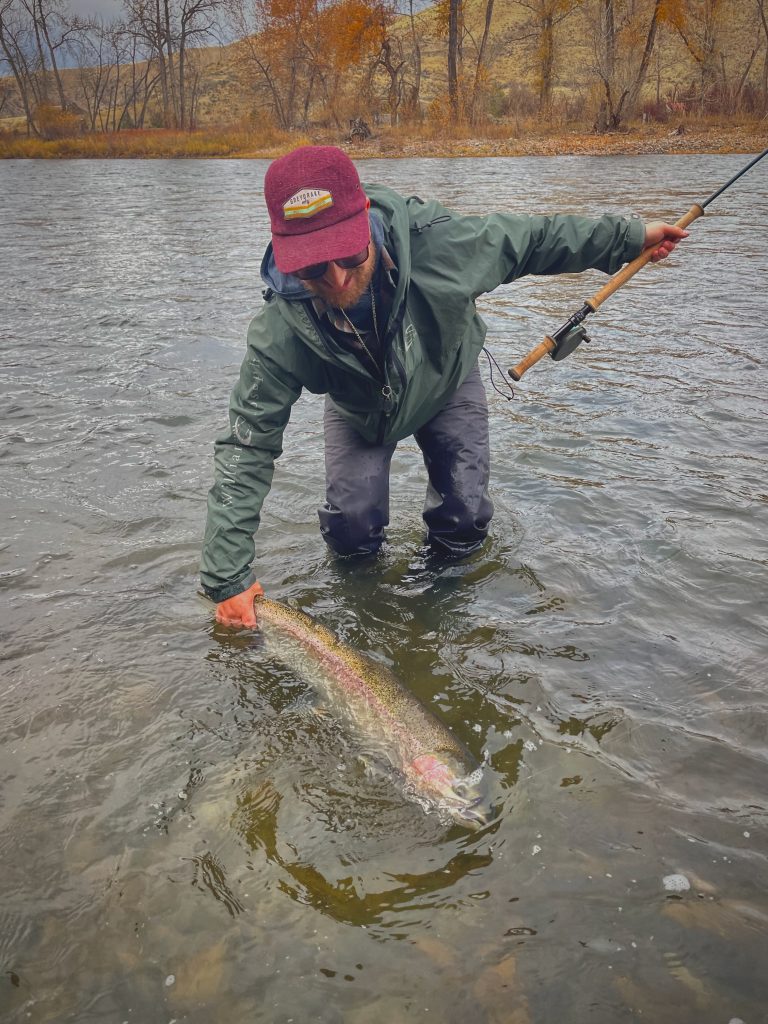
The fish finally rolled, and its tail slapped the surface. This was a real one. It would turn out to be a stunning wild B-run fish. Deep, heavy, and completely breathtaking. Rufus was alert at my side now, and my two human companions had reeled in and gathered behind me, silently watching. After much back and forth, I had retrieved the backing and running line. The Wintertide was nearing the rod tip when the fish rolled again. Rufus charged at the fish, which is cute enough when it’s a trout—less so with a fish like this. He bounded into the water after the large fish, and at one point, I felt the fish bash into his legs. I couldn’t blame him, I was eager to see this fish up close too.
“You might have to hold him,” I offered to my buddy as he waded down to hold onto the dog. The shallow bar we stood on separated a slower backwater from the speed of the main current. I needed to get the fish into the soft water to land, but it hated the shallow bar and refused to cross.
Eventually, I bore down and forced it to cross; the rod whistled in a sickening noise. You know that noise if you’ve snapped a graphite rod on a big fish. Finally, it was over. The rod survived the tailing of the fish, no thanks to me, and in my hand I held pure power. A Signal Light Spey pinned deep in the corner of the mouth. The heavy wire hook was buried, but slid out easily. It was one of those rare hook sets where it was as good as could be, but it still seemed miraculous that it held.
The fish released me more than I released it. Wrenching itself out of my grip with one flick of the tail. We had snapped a few photos before I unhooked it, and I had planned to let Rufus check it out while it revived, but the fish had other plans. I gazed at the churned water where it swam off, our tussle a minor inconvenience on its march to upriver spawning grounds. I was left with one thought “We don’t know shit about these fish”.
But we know enough. We are good at catching them and even better at ruining their resources. I hope there are more seasons like the most recent, with many anglers encountering wild, healthy fish. These seasons are a breath of fresh air; restaurants are busier. Hotels and campgrounds full. It would be nice to think that we’ve turned a corner. However, it’s far more likely that the peaks and valleys of the anadromous fish return to this river and other Columbia basin rivers will continue to drop until there is almost nothing left. In many ways, we are already there. The removal of the Snake River dams is perhaps our last Hail Mary.
An art installation on Highway 93 depicts a Chinook Salmon crucified on a Utility Pole, a poignant reminder of our current resource management.
The Snake River dams, built under the guise of prosperity, are killing the resource responsible for so much of Idaho’s fertility. The Snake River is a unique anomaly originating from the mineral-rich area of the Yellowstone Plateau, which was then supercharged by rivers like the Salmon that once held robust returns of anadromous fish. These tributaries delivered critical ocean nutrients to the high desert of the intermountain west. Given the trickle of fish that have returned in the past decade, it’s hard to see a positive way out of this. But on those cold fall mornings, I can feel it; optimism, hope, excitement – wilderness.
I believe that this feeling is worth protecting, and that places that inspire this feeling are worth protecting. This place, this river, these fish—they are worth saving. Wilderness is the core identity of Idaho and Idahoans, which is worth saving.
Cecil Andrus, a logger turned politician, was elected twice as Idaho’s Governor. No easy task for a Democrat in a red state. Andrus, who was instrumental in protecting much of Idaho’s wild resources, once said.
“Of course we must make use of the wealth in our resources,” said Andrus. “But if we abuse the
land, the water and the air, we will have befouled forever the gift that we must leave to those who follow us.”
Protecting our resources and keeping them open for the enjoyment of all has historically been a core American ideal. But we are entering a dangerous time, a crucial time for our public lands and resources. Idaho will play a critical role in the story of the survival or extirpation of Columbia Basin Steelhead. If we want a say in that outcome, we’d better start doing it now.