
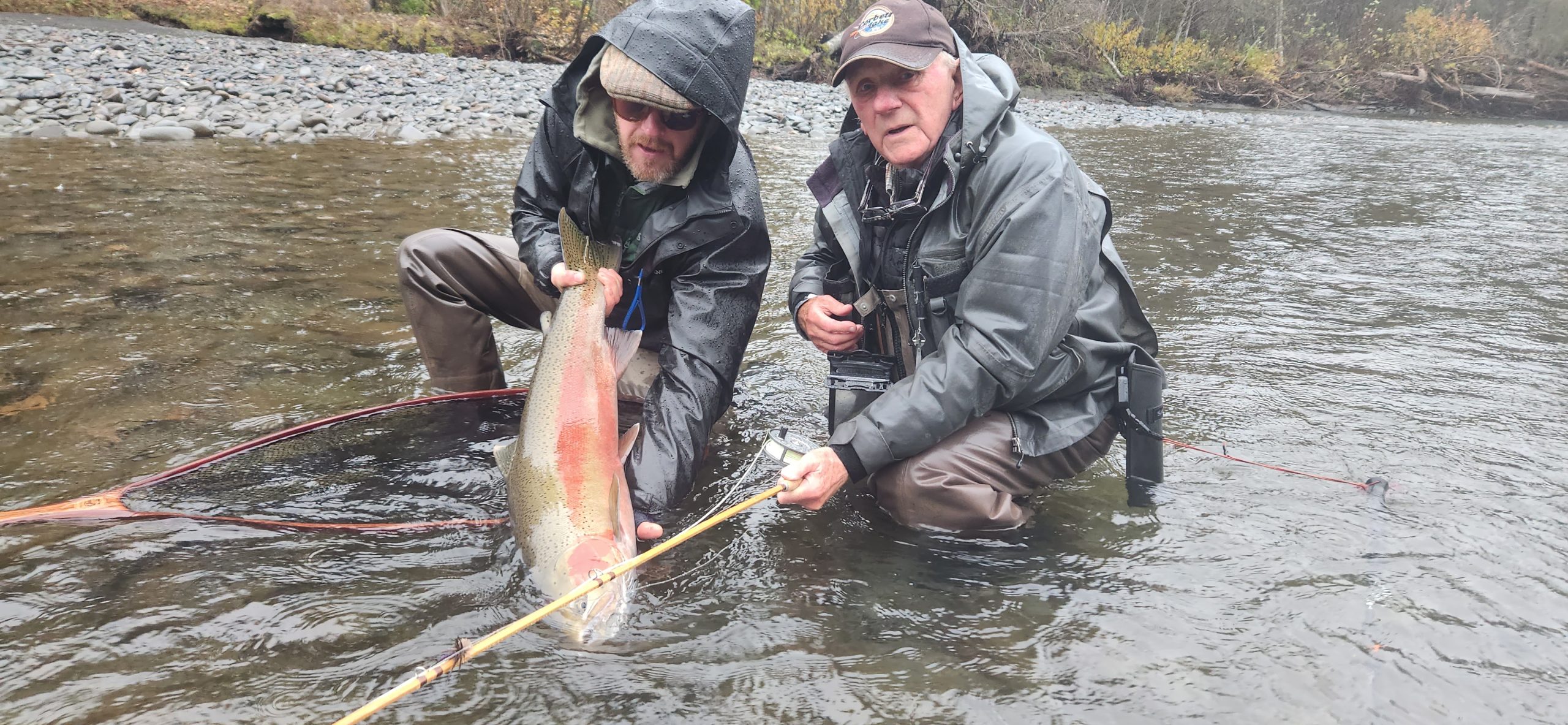
In the deep pools and storied rivers of British Columbia, fly fishing is more than a sport—it’s a cultural inheritance shaped by figures like Roderick Haig-Brown and Tommy Brayshaw. Few have done more to preserve, document, and celebrate that heritage than Art Lingren. A prolific writer, masterful fly tier, and passionate historian, Lingren has spent decades chronicling the evolution of fly fishing in British Columbia. His books are touchstones for anglers seeking to understand the traditions, people, and waters that have defined the sport in the Pacific Northwest—especially in BC. His detailed recreations of classic British Columbia steelhead patterns, his own innovative designs, and his work with traditional Atlantic salmon flies have helped preserve the stories behind the flies and the anglers who tied them. But Lingren’s contributions go beyond the page: he has generously shared his time and expertise with fly fishing clubs, conservation groups, and organizations dedicated to protecting wild steelhead and the rivers they inhabit. In every sense, Art Lingren is a Canadian treasure.
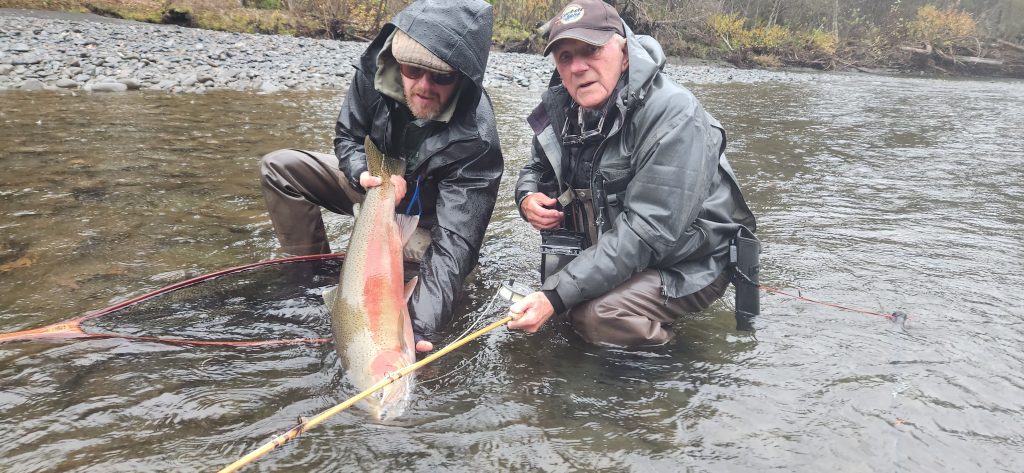
I first met Art in 2018, and true to his generous spirit, he invited me to his home in Vancouver, BC. We spent the afternoon immersed in fly fishing history, surrounded by books, photographs, and walls adorned with fly-tying artistry—an archive of BC’s angling past.
Later that day, I joined him as a guest at a Totem Fly Fishers meeting, where Art was the featured speaker. It was clear, watching him present, how deeply respected he is within the community—not just for his scholarship, but for his authenticity and passion. That day left an impression on me: I had met not just a historian, but a keeper of tradition, a craftsman, and a true ambassador of the sport.
Lingren: The Early Years
Although Lingren never had the chance to fish with his father—who passed away when he was just five—Lingren grew up hearing stories from his uncle about his father’s skill with a rod. Perhaps that natural instinct for fishing runs in his blood. His formal introduction to fly fishing came years later, through a neighbor in his apartment building who needed a fishing partner. While the neighbor made an attempt to teach him how to cast, Lingren wanted more structure and enrolled in a night school course on fly fishing—a popular and accessible way to learn in the 1960s. In 1965, he purchased his first fly rod, a moment that marked the beginning of a lifelong pursuit.
Like many anglers, Lingren’s early years on the water blended both fly and gear fishing. His first steelhead came in 1966, caught in a tree-lined ravine along Vancouver Island’s Caycuse River—an experience that sparked a lifelong passion for the species. Just two months later, in January 1967, he landed his second steelhead on the Cowichan River. These formative catches anchored him to the rivers of British Columbia and set the course for a lifetime of angling and exploration.
His dreams became filled with the elegance of tight loops and perfectly placed casts. By late 1978, as recorded in Leaves From A Fisherman’s Journals, Lingren wrote, “This was a turning point in my fishing life, as I was tiring of catching fish with gear.” That realization marked the beginning of his transition to fly fishing exclusively. He started tying steelhead flies in 1979, immersing himself in the craft. “I started dressing steelhead flies early in the year,” he recalled, “tying old faithful flies—Polar Shrimps, Woolly Worms, and chenille-bodied Doc Spratleys.” Lingren fully embraced fly fishing, leaving gear behind and dedicating himself entirely to the fly and the rivers that would define his angling life.
That fall of 1979, determined to catch a steelhead on the fly, Lingren committed himself to the Thompson River. On October 21, he landed his first fly-caught steelhead—a defining moment he recorded in his daily angling journal and later recounted in several of his published works. It was a memorable season: eight steelhead took his fly. One fish was lost to a broken hook point, damaged in an earlier backcast—a detail he noted with care, reflecting the observational care that would become a hallmark of his writing.
Undeterred, he returned to the same run that afternoon and landed what Lingren calls a 14-pound doe, which he released. Both fish had taken an early version of Lingren’s Steelhead Spratley, tied with a chenille body. Two years later, he refined the pattern, replacing the chenille with a slimmer, more elegant body of seal fur and floss—a transformation that reflected his growing skill as a tier and his eye for classic aesthetics in steelhead flies.
Lingren’s affinity for steelhead became a defining theme in his writing. Many of his books explore the art and history of fly fishing for steelhead, reflecting both his personal journey and the broader traditions of British Columbia’s legendary rivers.

Art Lingren: The Fly-Fishing Historian
Art Lingren stands as one of British Columbia’s foremost scholars and chroniclers of fly fishing history. Widely regarded as the province’s de facto angling historian—and officially recognized in that role by the British Columbia Federation of Fly Fishers (BCFFF) since 1990—his legacy is rooted in decades of thoughtful writing. Lingren has captured the stories of the people, patterns, and rivers that have shaped generations of BC anglers.
His passion for angling history can be traced back to a thoughtful gift from his wife, Bev. On their second wedding anniversary in 1968, she gave him a copy of Fisherman’s Fall by Roderick Haig-Brown—an author whose work would soon become central to Lingren’s journey. That spark was further fanned when his mother gifted him The Western Angler for his birthday. From then on, Lingren immersed himself in the literature of the sport, building a collection with the help of rare book dealers in Canada and abroad.
Through tireless research, Lingren has uncovered some of British Columbia’s earliest fly patterns, such as the Red Shirted Trapper—first recorded by naturalist John Keast Lord during his work with the Boundary Commission in the 1800s. His writings for Fly Lines magazine include numerous historical articles on fly patterns, tiers, and regional traditions. In addition, he authored stand-alone publications for the BCFFF on the rise of double-handed rods in the province and a comprehensive history of the organization itself.
Lingren’s personal records are equally remarkable. For over 60 years, he has kept detailed logbooks and diaries chronicling his fishing experiences. These volumes include weather conditions, water levels, fly patterns, photos, and newspaper clippings—offering a rare, firsthand chronicle of British Columbia’s angling history. “Keeping those records is a chore,” he admitted. “I use abrupt and sometimes incomplete sentences, but I make sure I record something even if I didn’t catch any fish.” It’s a testament to his devotion—an archive that captures the rhythms and realities of a life on the water.
His contributions also extend well beyond the written word. In 1998, Lingren played a key role in Canada Post’s commemorative fly-fishing stamp series, tying Tommy Brayshaw’s Coquihalla Orange for one of the six featured stamps. He also nominated Van Egan to tie Haig-Brown’s Steelhead Bee and Rob Brown to tie the Coho Blue, helping to ensure that British Columbia’s fly-fishing heritage was well represented in this national tribute.
Lingren is an active member of the University of British Columbia’s Harry Hawthorn Foundation, an organization dedicated to preserving angling literature. In 2002, he authored the introduction to For the Contemplative: A Bibliography of Works Related to Angling and Sport Fishing in the University of British Columbia Library. When the university reprinted the volume for the foundation’s 70th anniversary, Lingren expanded that introduction into a full chapter—further cementing his status as both a steward of fly-fishing history and a scholar of the sport’s literary tradition.
“I have spent many hours in libraries and collections,” Lingren writes, “to satisfy a desire to learn more about the sport or to research information for my fly-fishing and fly-tying books.” That deep curiosity—to dig deeper, share generously, and preserve what matters—has made Lingren’s body of work a cornerstone of angling culture in British Columbia and beyond.
Art Lingren on Writing: A Fisherman Who Writes
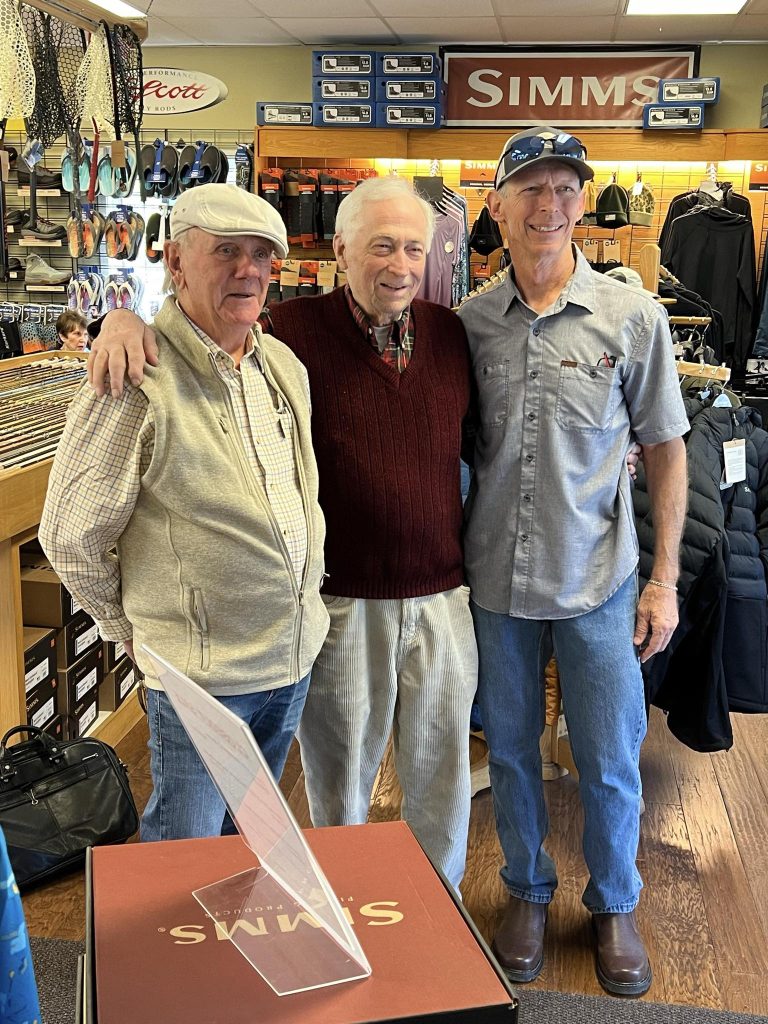
Lingren describes himself as “a fisherman who writes.” The distinction is important to him—it emphasizes his identity as an angler first, with writing as a natural extension of that passion. His journey into authorship began modestly, contributing occasional articles. This deepened after he joined the Totem Fly Fishers, a British Columbia-based club, where he became editor of the club newsletter. At first, he compiled short pieces for fellow members, but that early work soon evolved into more substantial contributions to magazines and, eventually, full-length books.
An ardent admirer of Roderick Haig-Brown, Lingren embarked on his first small book project in 1984 as a Totem Fly Fishers initiative to honor the legendary writer and conservationist. Haig-Brown had advised the club during its formation and held honorary membership, making the project particularly meaningful. Lingren recalls, “I had done my research and had a list of 20 of his flies—and I struggled away putting together a book.” The result was The Haig-Brown Patterns, a hand-assembled tribute in which Lingren carefully tied and mounted each fly, presenting them alongside a portrait of Haig-Brown. That first copy was given to Ann Haig-Brown, Rod’s widow, and, as far as Lingren knows, it still resides in the Haig-Brown family home. He produced just fifteen copies in total, sharing them with friends who, like him, were “enthusiastic Haig-Brown fans.”
Encouraged by this early effort, Lingren pursued commercial publication in the 1990s. He first approached Nick Lyons, who declined the project. But Frank Amato—a passionate advocate for Haig-Brown’s legacy—embraced the idea, and Fly Patterns of Roderick Haig-Brown was published in 1993. The book represents a pivotal step in Lingren’s writing career, marking his emergence as a serious chronicler of British Columbia’s fly-fishing heritage.
With that momentum, Lingren turned to the Thompson River, a fishery he had explored for 25 years. His meticulous record-keeping—detailed diaries of catches, conditions, and observations—became the foundation for Thompson River Journal, published in 1994.
With Thompson River Journal, Lingren had demonstrated his ability to blend personal experience with historical perspective. But he was only beginning to explore the full scope of British Columbia’s fly-fishing legacy. His next major project, Fly Patterns of British Columbia, aimed to document the province’s rich and regionally diverse angling history. Lingren envisioned a book that would go beyond a single river or angler and instead map the evolution of fly design across four key fisheries and patterns for these fisheries: interior trout, coastal trout waters, saltwater salmon grounds, and the storied steelhead rivers. Drawing from archival sources, personal interviews, and fly collections, Lingren highlighted the contributions of pioneering anglers such as Tommy Brayshaw, Arthur Bryan Williams, Bill Nation, and others. He showcased the regional variations in fly design and technique, connecting modern anglers to the roots of their craft.
He followed it later, in 2006, with Contemporary Patterns of British Columbia, bridging historical foundations with modern innovations. Where Fly Patterns of British Columbia captured the foundational history of the province’s fly-fishing culture, Contemporary Patterns of British Columbia carried that tradition into the present.
In all, Lingren published nine books with Amato Publications, including the Fly Patterns series and the River Journal and Steelhead River series. “I started small and expanded to the books that are published now,” Lingren reflects. “I’ve done a lot of other stuff too—like the history of the BC Federation of Fly Fishers. I’ve written a 53-page piece on the history of Spey casting and its reintroduction to North America that I did for the BC Federation of Fly Fishers.”
Since his early publications with Frank Amato Publications and his contributions to the BCFFF and regional clubs, Lingren has increasingly turned to self-publishing. His more recent works explore the lives of notable fly-fishing personalities, document fly patterns, and include autobiographical volumes drawn from his own fishing journals—offering both personal reflections and insights into his role as a fly-fishing historian, continuing the tradition he began decades earlier.
Lingren’s writing is rooted in experience, history, and deep reverence for those who shaped British Columbia’s fly-fishing tradition. More than just a writer, he is a dedicated fisherman preserving the stories, techniques, and legacy of a sport that continues to inspire generations.
Art Lingren: The Fly Tyer
Art Lingren’s entry into authorship came through fly tying. His earliest books focused on the iconic patterns of British Columbia, particularly those associated with Roderick Haig-Brown. It was through flies—both their construction and the stories they carried—that his voice first found the page.
Early in his tying life, Lingren’s interest expanded to classic Atlantic salmon patterns, inspired by British authors like Eric Tavender (Salmon Fishing) and A.E. Knox (Autumns on the Spey, 1872). “I started tying the classic Atlantic salmon flies in the early 1980s” Lingren recalls. “I remember framing a couple and donating them to the Steelhead Society of British Columbia fundraiser around 1981 or 1982. They sold for about $30 each.”
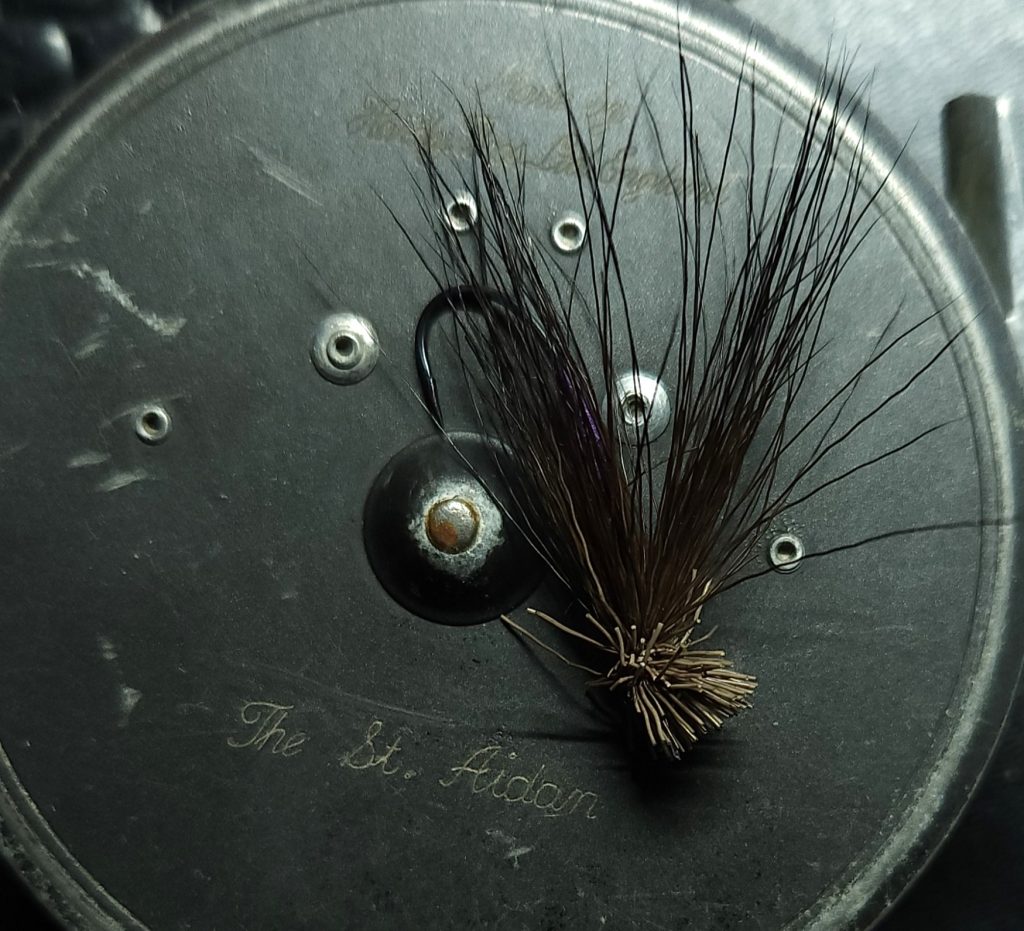
Fly tying and reading were always linked for Lingren. “I do like nicely bound books, and I’ve tried to get the nicest copy available that I can afford,” he says. “But it’s what is between the boards that is of real interest to me.” His studies led him to British Columbia’s early angling figures—General Noel Money, Arthur Bryan Williams, Tommy Brayshaw, and of course, Haig-Brown—anglers who imported British salmon techniques and adapted them to a new world of steelhead.
Lingren honed his technical skills through close study of classic manuals such as Hale’s How to Tie Salmon Flies (1892) and Pryce-Tannatt’s How to Dress Salmon Flies (1914). “If a fly tyer is adept at the techniques used in dressing the classics,” he writes, “he or she can apply those skills and dress most other types of flies.” His patterns—whether traditional replicas or original creations—reflect both visual elegance and a deep reverence for the craft’s traditions.
Among his closest fly-tying companions was Bob Taylor. “Bob and I were good friends for many years. We often talked about fly design and use. We used to joke that there should be a law requiring steelhead fly fishers to catch their fish on nice-looking flies. Of course, beauty is in the eye of the beholder.”
That enduring fascination with beauty, particularly the aesthetic of Victorian Atlantic salmon flies, continues to influence Lingren’s style. “I really liked the look of flies tied with tips, tags, and butts, and began dressing some of my steelhead flies in that tradition,” he says. “A fully dressed classic starts with the tip over the hook barb, while a low-water fly starts with the tip at or forward of the hook point.” These stylistic choices connect him to British Columbia’s steelheading pioneers—Money, Haig-Brown, and Brayshaw—all of whom brought with them the techniques and sensibilities that shaped the province’s fly-fishing culture.
Over time, Lingren developed and refined many original and adapted fly patterns. “I’ve created flies that I have much confidence in,” he writes, “and by adapting them to the conditions, they’ve provided me with consistency.” For Lingren, every fly begins with intention. Fly design is never random—it’s about clear choices, from hook size to material behavior in current. “It’s not enough for a fly to look good in the vise,” he believes. “It must move, fish, and trigger the response it was built to elicit.”
This thoughtful, methodical approach mirrors the care he brings to his historical writing: deeply informed by experience and grounded in purpose. “I find it pleasing to the eye to open a fly box and see all the well-dressed flies lined up—then select the one most appealing to my eye that suits the conditions.”
Art Lingren: Fly Fishing Philanthropist
Lingren’s impact on fly fishing extends far beyond his books, flies, and historical research. Through his generosity, deep knowledge, and decades of community involvement, he has helped shape the experience and understanding of countless anglers across British Columbia and beyond.
From early on, Lingren aligned naturally with fly fishing clubs that emphasized education, conservation, and tradition. As a long-standing member of the Totem Fly Fishers—one of British Columbia’s most storied clubs—he became not just a leader but a living repository of the province’s angling past. His talks and presentations were as informative as they were inspiring, always grounded in history, personal experience, and a deep reverence for rivers and fish.
Lingren never hoarded knowledge. Whether mentoring one-on-one, speaking at club events, or corresponding with tyers and anglers around the world, he always made time to share what he knew. Many in the BC fly-fishing community—and well beyond it—can point to a moment when Art passed along a pattern, lent a cherished book, or offered an insight that changed how they saw the water.
He has also contributed extensively to conservation and education efforts. Through donations of flies and signed books, Art has helped raise funds for organizations such as the Steelhead Society of British Columbia, the BC Federation of Fly Fishers, and numerous clubs and stream keeper groups.
For those fortunate enough to spend time with him—on the water, in his home, or seated beside him at a meeting—his quiet enthusiasm, deep knowledge, and unwavering commitment to the culture of fly fishing leave a lasting impression.
A Living Legacy

In an era when fly fishing often trends toward the fast and disposable, Lingren represents something enduring—an angler whose life is steeped in tradition, and whose work ensures those traditions endure. Through his books, his flies, his lectures, and his mentorship, Lingren has preserved not just patterns or places, but a sensibility rooted in respect—for the craft, the rivers, and the fish themselves.
His influence reaches far beyond the pages he’s written or the clubs he’s helped shape. He’s passed on knowledge in fly shops, over coffee, on riverbanks, and through quiet generosity—sharing a fly, a book recommendation, or a note pulled from one of his beloved journals. A conversation with Lingren is to be reminded that fly fishing, at its best, is not only a solitary pursuit but a shared cultural practice, passed thoughtfully from one angler to the next.
I consider myself fortunate to know Lingren—and luckier still to have been mentored by him in the deep history of British Columbia’s fly-fishing traditions. From our first meeting at his home in Vancouver, to the occasional lunch in Bellingham, or more often, an email exchange, his quiet encouragement and encyclopedic knowledge have stayed with me.
Like Haig-Brown before him, Lingren is someone anglers turn to when they want to understand what came before and how to carry it forward—though he’d probably shrug off the comparison. His legacy is already in place, but it doesn’t seem like he’s slowing down. As long as there are rivers to fish and stories to tell, Art will be at it: tying, writing, and shaping fly fishing’s future in British Columbia—quietly, thoughtfully, and in his own way.